
There is something exciting about seeing new arrives appear in a fashion store. Even when you did not plan to buy anything, fresh pieces can instantly make you imagine new outfits, new colors, and a slightly different version of your everyday style. A new arrival is not just another product added to a website. It can be the missing piece that makes an old outfit feel completely different.
The best way to shop new arrivals, however, is not to grab everything that looks fresh. Trends move quickly, and a beautiful piece still needs to work with your lifestyle, wardrobe, budget, and personal taste. A smart shopper knows how to separate a genuinely useful addition from a short-lived impulse buy.
Whether you are looking for new clothing arrivals, new fashion arrivals, women’s new arrivals, men’s new arrivals, seasonal collections, or everyday wardrobe pieces, this guide will help you shop with more confidence. You will learn what new arrivals really mean, what to look for, how to style fresh pieces, and how to avoid common shopping mistakes.
What Are New Arrives in Fashion?
In fashion retail, “new arrives” generally refers to newly added products or recently launched items. You may see the phrase on online stores, boutique websites, department-store pages, and fashion marketplaces.
Retailers often use related terms such as new arrivals, new-in, latest arrivals, fresh arrivals, just added, new collection, and latest fashion. They all point to merchandise that has recently become available.
New arrivals can include almost anything:
- Dresses and skirts
- T-shirts and tops
- Jeans and trousers
- Cardigans and sweaters
- Jackets and coats
- Shoes and sneakers
- Handbags and accessories
- Jewelry
- Activewear
- Occasion wear
- Seasonal clothing
One important point is that new does not automatically mean better. A recently launched item may be trendy, but that does not mean it will suit your body shape, existing wardrobe, or daily routine.
A good stylist looks beyond the “new” label. The real question is whether the item adds something useful to your wardrobe.
Why Do Shoppers Love New Fashion Arrivals?
Fresh fashion creates a feeling of discovery. When shoppers see something they have not seen before, it can feel more interesting than an older product that has been sitting on a sale rack for weeks.
There is also a practical reason people follow new arrivals. Fashion stores usually organize fresh products around current seasons, changing trends, new colors, updated silhouettes, and upcoming occasions.
For example, spring arrivals may introduce lightweight fabrics, brighter colors, and relaxed shapes. Fall arrivals often bring knitwear, jackets, boots, deeper colors, and layering pieces.
New arrivals also help shoppers discover trends without having to follow every runway show. A person who rarely reads fashion news can still notice that certain shapes, colors, or materials are becoming popular simply by browsing a retailer’s newest section.
Still, I recommend treating new arrivals as inspiration rather than instructions. You do not need to change your entire wardrobe every time a new collection appears.
Women’s New Arrivals to Watch
Women’s new arrivals usually cover a wide range of styles because women often shop across multiple clothing categories. A useful new-arrival section should offer pieces for work, weekends, casual outings, events, travel, and everyday life.
Some particularly versatile categories include button-down shirts, relaxed trousers, knit tops, denim, midi skirts, simple dresses, lightweight jackets, and comfortable shoes.
A good example is a well-cut neutral blazer. It may look simple compared with a dramatic statement piece, but it can work with jeans, trousers, skirts, dresses, and even casual sneakers.
For everyday dressing, look for pieces that solve a real wardrobe problem. If you constantly struggle to create comfortable outfits for warm weather, a breathable shirt or relaxed trouser may be a smarter purchase than a highly decorative top you can wear only twice.
Stylist tip: Before buying a women’s new arrival, imagine at least three outfits using clothes you already own. If you cannot create three realistic combinations, pause before purchasing.
Men’s New Arrivals and Modern Wardrobes
Men’s new arrivals have also become much broader than the traditional basics of shirts, trousers, and formal jackets. Current collections commonly mix casualwear, workwear, streetwear, tailoring, sports-inspired pieces, and relaxed everyday clothing.
Useful categories include:
- Oversized or relaxed-fit T-shirts
- Straight-leg and relaxed denim
- Lightweight overshirts
- Casual button-downs
- Knit polos
- Utility jackets
- Clean sneakers
- Relaxed trousers
- Simple accessories
The key is balance. If you choose a loose shirt, you might pair it with straighter trousers rather than adding oversized proportions everywhere.
Color also matters. A new olive, navy, cream, brown, or charcoal piece can often integrate more easily into an existing wardrobe than a highly unusual color.
For men who prefer simple dressing, one carefully chosen new arrival can refresh several older outfits without requiring a complete wardrobe change.
New Arrivals for Every Season
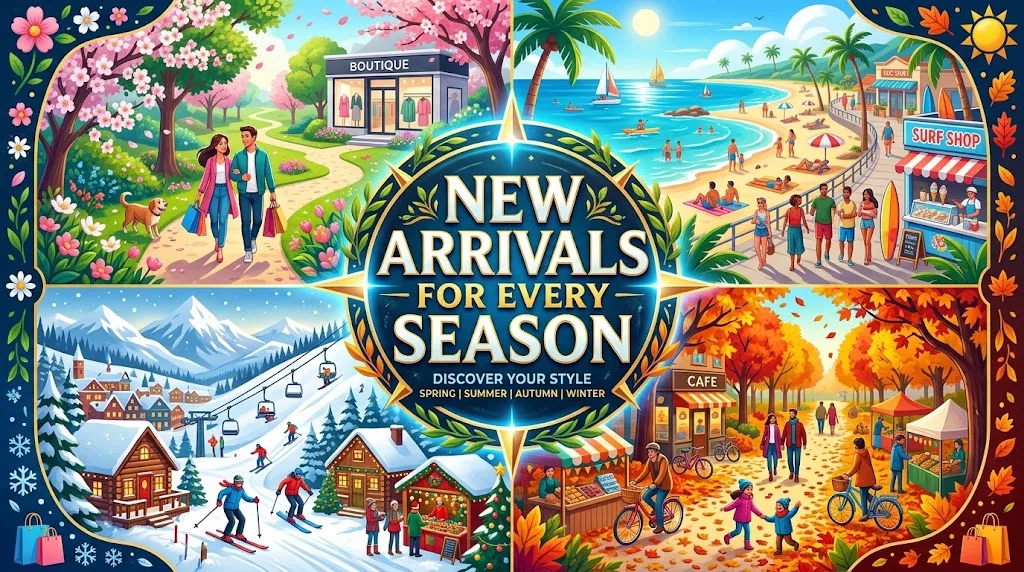
Fashion retailers constantly introduce new arrivals because shoppers’ needs change throughout the year. Seasonal shopping becomes easier when you understand what each period actually requires.
Spring: Look for lightweight layers, breathable shirts, transitional jackets, softer colors, and versatile shoes.
Summer: Prioritize breathable fabrics, relaxed silhouettes, lightweight dresses, shorts, linen-style pieces, cotton tops, and easy footwear.
Fall: This is the ideal season for layering. Cardigans, overshirts, denim jackets, knitwear, trousers, and light coats become especially useful.
Winter: Focus on warmth without ignoring shape. Coats, sweaters, boots, scarves, thermal layers, and heavier fabrics become more important.
One mistake shoppers make is buying a seasonal piece without considering how long they can actually wear it. A better approach is to think about your local weather and your personal schedule.
If winter lasts only a few weeks where you live, you may not need five heavy coats. If your climate stays warm for most of the year, lightweight pieces deserve a larger share of your wardrobe budget.
How to Choose the Best New Arrivals
The best new arrival is not necessarily the most fashionable item on the page. It is the piece that gives you style, comfort, versatility, and enough wear to justify its cost.
Before buying, ask yourself:
- Does this fit my personal style?
- Can I wear it with clothes I already own?
- Is the fabric suitable for my climate?
- Does the fit feel comfortable?
- Will I still want to wear it next season?
- Do I have somewhere realistic to wear it?
- Is the price reasonable for the number of times I expect to use it?
Pay attention to construction as well. Check seams, buttons, zippers, fabric weight, lining, and finishing details when possible.
A beautiful photograph can hide poor construction. Product images show appearance, but details such as fabric composition and care instructions tell you much more about how a garment may perform in real life.
New-In Trends Worth Trying
Not every trend deserves a place in your wardrobe. The smartest way to approach new-in fashion is to identify trends that can work with your existing style.
For example, if relaxed trousers are trending and you already wear classic shirts, adding one pair can update your wardrobe without making you feel like you are wearing a costume.
The same principle works with accessories. A new handbag shape, belt, shoe style, or pair of sunglasses can introduce a trend without replacing your entire closet.
Consider the trend-to-wardrobe ratio. If a trend can work with five or more things you already own, it may be worth considering. If it only works with one highly specific outfit, think twice.
Personal style should remain the foundation. Trends work best when they support your style rather than replace it.
How to Style New Arrivals With Old Clothes
You do not need a completely new wardrobe to make new arrivals feel fresh. In fact, combining new pieces with familiar favorites often creates the most natural outfits.
Suppose you buy a new cardigan. Instead of wearing it only with new clothing, try it with your favorite jeans, a basic T-shirt, loafers, or sneakers.
A new blouse can work with older trousers. A fresh pair of sneakers can update an outfit you have worn many times. A new belt can change the appearance of a familiar dress.
Try this simple formula:
One new piece + two or three trusted wardrobe staples + one finishing accessory.
This keeps the outfit balanced and prevents the “everything is new” look that can sometimes feel less personal.
My favorite styling trick is to change only one visual element at a time. It makes the difference noticeable while keeping the outfit comfortable and authentic.
New Arrivals for Casual Everyday Style
Everyday fashion should make life easier. A casual new arrival earns its place when you can wear it for errands, coffee, casual workdays, travel, or meeting friends.
Look for pieces that combine comfort with a polished shape. A soft T-shirt with a good neckline, straight-leg jeans, relaxed trousers, a simple cardigan, or a lightweight overshirt can become surprisingly useful.
For example, imagine a weekend outfit built around relaxed denim. Add a clean T-shirt, an overshirt, comfortable sneakers, and a simple bag. Nothing needs to be dramatic, yet the outfit can still look intentional.
Avoid buying casual clothes simply because they feel comfortable in the fitting room. Comfort matters, but shape matters too. A garment should allow movement while still giving your outfit some structure.
New Arrivals for Work and Office Wear

Workwear new arrivals require a little more planning because office dress codes vary widely. A creative workplace may welcome relaxed tailoring and statement colors, while a traditional office may require more conservative clothing.
For a flexible professional wardrobe, consider:
- Tailored trousers
- Structured blazers
- Knit tops
- Simple shirts
- Midi skirts
- Polished flats
- Loafers
- Minimal handbags
- Lightweight layering pieces
Neutral colors make mixing easier, but you do not have to avoid color completely. A muted blue shirt or deep green blazer can add personality without overwhelming a professional outfit.
Pay attention to fabric as well. Clothes that wrinkle heavily may look great online but become frustrating during a long workday.
Expert tip: Buy workwear based on your actual week, not an imaginary lifestyle. If you spend most days in smart-casual clothing, prioritize pieces you will genuinely wear.
New Arrivals for Parties and Special Events
Special-occasion arrivals can be tempting because they often feature striking details, unusual fabrics, and dramatic silhouettes. However, event clothing can quickly become expensive if you buy something for one occasion and never wear it again.
When shopping for an event, first identify the dress code. A wedding, dinner party, formal celebration, graduation, and casual gathering may all require different levels of dressing.
Then consider whether the piece can be styled differently later.
A simple satin-style skirt, for instance, might work for an evening event with heels and statement jewelry. Later, you could pair it with a knit sweater and casual shoes for a more relaxed look.
The same idea applies to dresses. A versatile dress can change completely with a jacket, belt, different shoes, or new accessories.
The goal is not to make every special-event outfit basic. It is to make your purchases more useful after the event is over.
How to Shop New Arrivals Online
Online shopping makes new fashion arrivals incredibly easy to browse, but it also makes impulse buying easier.
Start by checking the size guide, not just the size you normally buy. Measurements can vary significantly between brands and even between different cuts from the same brand.
Next, read:
- Fabric composition
- Care instructions
- Product measurements
- Fit description
- Customer reviews
- Return policy
- Shipping information
Reviews can be especially useful when shoppers mention whether an item runs large, feels heavy, stretches after wearing, or looks different from the product photographs.
Product photography can also affect your judgment. Zoom in on fabric texture and construction whenever the website allows it.
Finally, put an item in your cart and wait before purchasing if you are unsure. A short pause often reveals whether you genuinely want the item or simply reacted to the excitement of seeing something new.
Common Mistakes When Buying New Fashion
The biggest mistake is assuming that new means necessary. Retailers are designed to make fresh products feel exciting, but your wardrobe does not need constant replacement.
Another common mistake is buying an item without considering existing clothes. A statement jacket may look amazing, but if nothing in your wardrobe works with it, you may rarely wear it.
Other mistakes include:
- Ignoring fabric quality
- Choosing the wrong size
- Buying only because an item is trending
- Forgetting your climate
- Purchasing duplicate basics
- Ignoring care requirements
- Buying without checking return policies
- Choosing appearance over comfort
There is also a psychological trap: the fear that you will miss out if you do not buy immediately. While limited stock can sometimes be real, not every new arrival is a once-in-a-lifetime opportunity.
Give yourself permission to leave an item behind. Good style comes from thoughtful choices, not constant shopping.
How to Build a Wardrobe Around New Arrivals
If you regularly shop new arrivals, build your wardrobe around a strong foundation first. Basics provide the structure that allows trendier pieces to work.
A practical wardrobe might include:
- Well-fitting everyday trousers
- Reliable jeans
- Neutral tops
- One or two layering pieces
- A versatile jacket
- Comfortable everyday shoes
- A polished pair of shoes
- A useful bag
- Simple accessories
Once those pieces are in place, new arrivals become opportunities to add personality.
Think of your wardrobe as a small ecosystem. Every new purchase should have a relationship with something already inside it.
A useful rule is one-in, one-review rather than automatically following one-in, one-out. When something new enters your wardrobe, review similar items you already own. You may discover that you have three nearly identical black tops and actually need a different category.
This approach makes shopping more intentional and reduces clutter.
How to Find Quality New Arrivals at Better Prices
You do not need to buy every new arrival at full price. Smart shopping means understanding when paying more makes sense and when waiting is reasonable.
For basics that you expect to wear frequently, better construction can justify a higher price. For a short-lived trend, a lower-cost option may make more sense if the quality remains acceptable.
Watch for seasonal transitions. Retailers often introduce new collections while reducing prices on previous-season pieces. Those older pieces may still look current, especially when they have classic shapes.
Also compare the cost per wear rather than looking only at the ticket price.
A $100 jacket worn 50 times costs about $2 per wear. A $30 statement top worn once costs $30 per wear.
Price is not the only measure of value, but this simple calculation can change how you think about fashion purchases.
How to Make New Arrivals Feel Personal
The most stylish person in the room is not always wearing the newest clothes. Often, they are wearing familiar pieces in a way that feels unmistakably personal.
Accessories can help create that effect. Try adding a favorite watch, scarf, belt, bag, jewelry piece, or pair of shoes to a new outfit.
You can also play with proportions. Tuck a loose shirt into high-rise trousers. Add a belt to a relaxed dress. Layer a fitted top under an oversized jacket.
Color is another powerful tool. If your new arrival has a strong color, repeat a small hint of that shade elsewhere in the outfit rather than matching everything exactly.
Most importantly, pay attention to how you feel in the clothes. If you constantly adjust a garment, feel uncomfortable, or avoid moving naturally, it is probably not the right purchase regardless of how fashionable it looks.
Final Thoughts on New Arrives
New fashion arrivals are exciting because they give us a chance to refresh our style. But the smartest approach is not to chase every fresh product. It is to understand what genuinely improves your wardrobe.
Look for quality, versatility, comfort, fit, and personal relevance. Use trends as inspiration, combine new pieces with clothes you already love, and think about how often you will realistically wear each purchase.
Whether you are shopping for casual clothes, office outfits, seasonal fashion, special occasions, or everyday basics, the same principle applies: choose pieces that make getting dressed easier and more enjoyable.
The best new arrival is the one that does more than look good on a product page. It should make you open your wardrobe and think, “I already know exactly how I am going to wear this.”
Frequently Asked Questions About New Arrives
1. What does new arrives mean in fashion?
“New arrives” usually refers to products that a retailer has recently added to its collection. The items can include clothing, footwear, accessories, seasonal pieces, and other fashion products.
2. Are new arrivals always the latest trends?
Not necessarily. New arrivals are recently added products, while trends describe styles that are currently gaining popularity. A new product can be classic, basic, seasonal, or trendy.
3. How often should I shop new arrivals?
There is no fixed schedule. Instead of shopping every time a retailer adds new products, review your wardrobe and buy only when you have a genuine need or find something that adds clear value.
4. What should I look for when buying new arrivals online?
Check the size guide, measurements, fabric composition, reviews, care instructions, fit description, product photos, and return policy. These details can help you make a more informed decision.
5. How can I style new arrivals without buying a whole outfit?
Pair one new item with two or three existing wardrobe staples. Then change the look with accessories, shoes, layering, or different proportions.
6. Are expensive new arrivals better quality?
Price alone does not guarantee quality. Look at fabric, stitching, construction, finishing, fit, and durability. A moderately priced item can sometimes offer better value than a much more expensive piece.
7. How do I avoid impulse buying new fashion arrivals?
Create a short pause between seeing and buying an item. Ask whether it fits your lifestyle, works with your existing wardrobe, feels comfortable, and can create several outfits. If the answer is no, leaving it behind may be the smarter choice.