Your home does not need a complete makeover to feel fresh in 2026. Sometimes, changing one wall color, replacing a harsh ceiling light, adding a vintage chair, or bringing in a better rug can completely change how a room feels.
That is what makes the decorating trends for 2026 so exciting. The focus is moving away from homes that look perfectly styled for a catalog and toward spaces that feel warm, personal, comfortable, and genuinely lived in. Current design research points toward richer colors, tactile materials, curved forms, natural finishes, wellness-focused spaces, and rooms that tell a story.
There is also a bigger shift happening underneath all these individual trends. People are asking their homes to do more. A living room may need to host family dinners, support remote work, create a relaxing evening atmosphere, and still look beautiful. A bedroom needs to feel restful. A bathroom can become a private retreat.
So instead of asking, “What is the trendiest room right now?” a better question is, “Which ideas will make my home feel better to live in?”
This guide breaks down the biggest decorating directions for 2026, along with practical ways to use them without making your home look forced or overly trendy.
1. Warm and Earthy Colors Are Replacing Cold Neutrals
The biggest color shift in 2026 is easy to understand: homes are getting warmer.
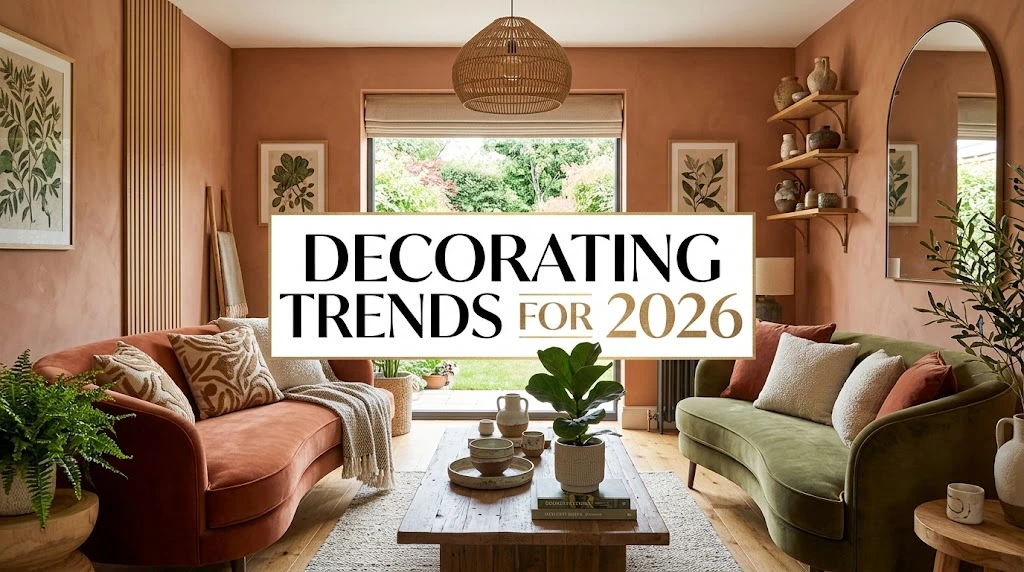
For years, cool gray, bright white, and icy beige dominated modern interiors. They are still useful colors, but designers and homeowners are increasingly layering warmer shades such as chocolate brown, rust, terracotta, caramel, mushroom, taupe, cream, olive, and muted sage.
Houzz search data supports this change. Searches for rust colors rose sharply, while chocolate brown, mushroom, sage, taupe, and cream also gained interest in its 2026 research.
The key is not to paint every wall dark brown. Instead, build a warm color story.
For example, a living room could combine:
- Cream walls
- Medium-tone wood furniture
- A chocolate brown sofa or accent chair
- Rust-colored cushions
- A muted olive rug
- Brass or aged-metal lighting
- Natural linen curtains
The result feels warm without becoming heavy.
If your home already has white walls, you do not need to repaint immediately. Start with smaller pieces. Add a terracotta vase, caramel throw, brown wooden side table, or olive cushion.
Stylist tip: Choose one main neutral, one supporting earthy color, and one deeper accent. This creates visual balance and prevents the room from becoming a collection of unrelated shades.
One common mistake is using too many warm colors at the same intensity. If everything is equally orange, brown, or red, the room can feel flat. Contrast matters.
2. Layered Interiors Are Taking Over From Minimalism
Minimalism is not disappearing, but the extreme version of it is losing some of its appeal.
In 2026, people are increasingly interested in rooms that look collected rather than purchased all at once. That means mixing textures, old and new pieces, artwork, books, ceramics, plants, textiles, and objects that actually mean something to the people who live there.
Houzz reports that professionals are seeing stronger demand for layered, personal interiors rather than spaces built around off-the-shelf perfection.
Think about the difference between these two rooms.
The first contains a sofa, coffee table, matching side tables, one large rug, and almost nothing else.
The second contains a comfortable sofa, a vintage table, a floor lamp, several books, framed art, a ceramic bowl, textured cushions, a plant, and a small object collected during travel.
The second room usually feels more human.
That does not mean you should fill every empty surface. Layering is not clutter. Good layering creates hierarchy.
Start with large elements first:
- Sofa or bed
- Rug
- Curtains
- Main lighting
- Artwork
- Smaller decorative objects
Then step back and look at the room from the doorway.
If every object demands attention, remove a few pieces. If the room feels empty and disconnected, add another layer of texture or personality.
3. Natural Materials Are Becoming More Expressive
Natural materials remain important in 2026, but their role is changing.
Wood, stone, linen, rattan, clay, wool, plaster, and natural fibers are no longer used only to create a “natural” aesthetic. Designers are using them because they add texture, variation, warmth, and character.
Houzz’s 2026 research shows strong interest in tactile surfaces such as sandstone, linen wallpaper, seagrass wallpaper, Venetian plaster, terracotta flooring, limewash, and wainscoting.
The important word here is tactile.
A smooth white wall may look clean, but a softly textured plaster finish changes how light moves across it. A mass-produced table may be useful, while a natural wood table with visible grain can become a visual feature.
You can introduce natural materials without remodeling your entire home.
Try:
- A wooden stool beside the sofa
- Linen curtains
- Woven baskets
- Stone or ceramic accessories
- A jute or wool rug
- Hand-thrown pottery
- Rattan dining chairs
- A natural wood mirror frame
If you are renovating, natural stone, handmade tile, plaster finishes, and warm wood can create a much stronger long-term foundation.
Expert advice: Do not choose every material from the same texture family. Pair rough with smooth, matte with slightly reflective, and soft with hard. Contrast makes natural materials more interesting.
4. Curves, Arches, and Soft Shapes Bring Movement
Straight lines have dominated modern interiors for a long time. In 2026, softer geometry is gaining even more attention.
Curved sofas, round coffee tables, arched doorways, scalloped details, rounded kitchen islands, wavy mirrors, and curved lighting can make a room feel less rigid.
Houzz reported major increases in searches for features including arched range hoods, arched pantry doors, rounded kitchen islands, curved peninsulas, scalloped tile, and curved staircases.
You do not need to rebuild your architecture to use this idea.
A simple round coffee table can soften a boxy seating area. A curved floor lamp can break up straight furniture. An arched mirror can make a basic bedroom wall more interesting.
If your room already has many curves, however, do not add more just because they are fashionable. Too many repeated shapes can make a space feel themed.
A useful decorating rule is to combine straight structure with soft accents.
For example:
- Rectangular sofa + round coffee table
- Straight cabinetry + arched mirror
- Boxy bed + curved bedside lamps
- Linear shelves + sculptural vase
That creates movement while maintaining visual order.
5. Vintage Pieces and Nostalgic Details Add Character
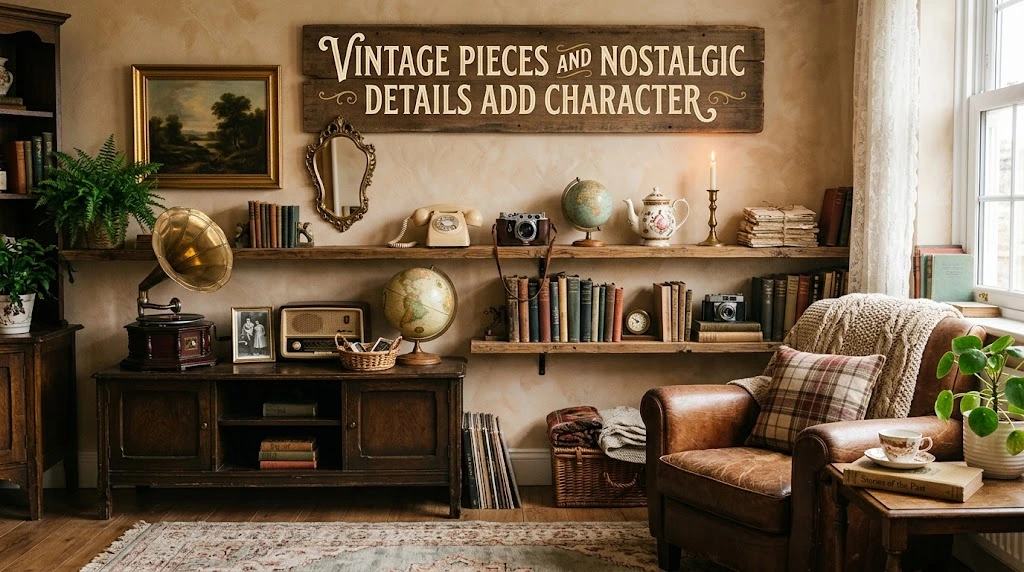
One of the strongest decorating directions for 2026 is a renewed appreciation for things that look as though they have a history.
That might mean an antique cabinet, vintage artwork, old-fashioned lighting, traditional molding, patterned wallpaper, inherited furniture, or a secondhand wooden chair.
The appeal is partly emotional. A perfectly new room can look polished but impersonal. One older object can immediately make it feel like somebody actually lives there.
Current design coverage also points toward lived-in, time-worn interiors and authenticity rather than spaces built purely around trend-driven objects.
You do not need expensive antiques.
Visit local markets, secondhand stores, estate sales, or even your family’s storage room. Look for pieces with good shape and useful proportions.
A dated finish can sometimes be improved with cleaning, new hardware, upholstery, or paint.
Common mistake: buying vintage pieces simply because they are old.
Age alone does not make an object attractive. Look for quality, proportion, craftsmanship, and something that connects with your existing room.
A vintage wooden chair beside a modern sofa can look intentional. Five unrelated antique objects placed together may look like a store display.
6. Statement Lighting Is Becoming Part of the Decor
Lighting is no longer something you choose at the end of decorating. In 2026, it deserves to be treated as one of the room’s major design elements.
A sculptural pendant can function almost like artwork. A beautiful table lamp can create a warm evening corner. Wall sconces can add both function and architectural interest.
The best approach is layered lighting.
Use three basic levels:
- Ambient lighting: general illumination
- Task lighting: focused light for reading, cooking, working, or grooming
- Accent lighting: light that highlights artwork, shelves, plants, or architectural details
Interior design guidance continues to emphasize layered lighting instead of depending entirely on one ceiling fixture.
Consider a living room with only one overhead light. It may work during the day, but at night it can feel harsh.
Now add a floor lamp beside the sofa, a small table lamp on a console, and warm accent lighting near artwork. The same furniture suddenly feels more inviting.
If you are renting, lighting is one of the easiest areas to change without making permanent alterations.
7. Textured Walls Create Depth Without More Furniture
If a room feels boring even though it contains enough furniture, the problem may be the surfaces.
That is why textured walls are becoming such an important decorating idea.
Venetian plaster, limewash, textured wallpaper, linen-look wallpaper, paneling, wainscoting, and other dimensional finishes can make a room feel richer without adding more objects.
Houzz reported significant increases in searches for Venetian plaster, linen wallpaper, seagrass wallpaper, limewash paint, and wainscoting in its 2026 research.
to a bedroom, a softly textured wall behind the bed can act as a natural focal point.
For a dining room, paneling can provide architectural character.
For a small powder room, patterned wallpaper can create a memorable experience in a relatively small space.
Before choosing a finish, consider lighting. Texture looks different under direct sunlight, soft lamps, and overhead lighting.
Practical tip: Always test a paint or wall finish on a reasonably large sample. A tiny color card rarely shows how a textured finish will behave across an entire wall.
8. Biophilic Decorating Makes Homes Feel More Restful
Plants are not the only part of biophilic design.
The broader idea is to create a stronger visual and sensory connection with nature. That can involve plants, natural materials, daylight, views, organic shapes, natural colors, water-inspired elements, and outdoor connections.
This matters because the home is increasingly being treated as a place for restoration and wellness. Houzz reported rising interest in wellness rooms, calming spaces, biophilic design, home gyms, yoga rooms, and specialized retreat spaces in 2026.
If you have good natural light, make the most of it. Keep windows visually open rather than blocking them with heavy furniture.
For darker rooms, choose plants that suit the available light rather than buying a plant because it looks good online.
You can also use:
- Natural wood
- Stone
- Botanical artwork
- Green and earthy colors
- Woven materials
- Organic shapes
- Fresh flowers
- Nature-inspired textiles
The goal is not to turn your living room into a jungle.
Instead, create small reminders of the outdoors.
9. Personalized Decor Is More Important Than Perfect Decor
Perhaps the most meaningful decorating trend of 2026 is personalization.
People are becoming less interested in homes that look like they were copied from one showroom. They want spaces that reflect their routines, interests, memories, and personality.
That could mean displaying family photographs, books you actually read, artwork from a local artist, handmade pottery, travel souvenirs, or furniture inherited from relatives.
Houzz’s latest professional research specifically highlights growing interest in character, personal storytelling, original architectural details, vintage pieces, handcrafted materials, and distinctive design choices.
This is good news if you have a limited budget.
You do not need to buy an expensive designer chair to make your home interesting. A meaningful object can have more visual and emotional impact than a costly accessory.
Try creating one “story corner.”
For example, place a small cabinet beneath a piece of art. Add two books, a ceramic object, a photograph, and a lamp. Suddenly, that area communicates something about you.
Best rule: Decorate for the people who live in the house, not for strangers scrolling through photographs.
10. Traditional Design Is Getting a Fresh 2026 Update
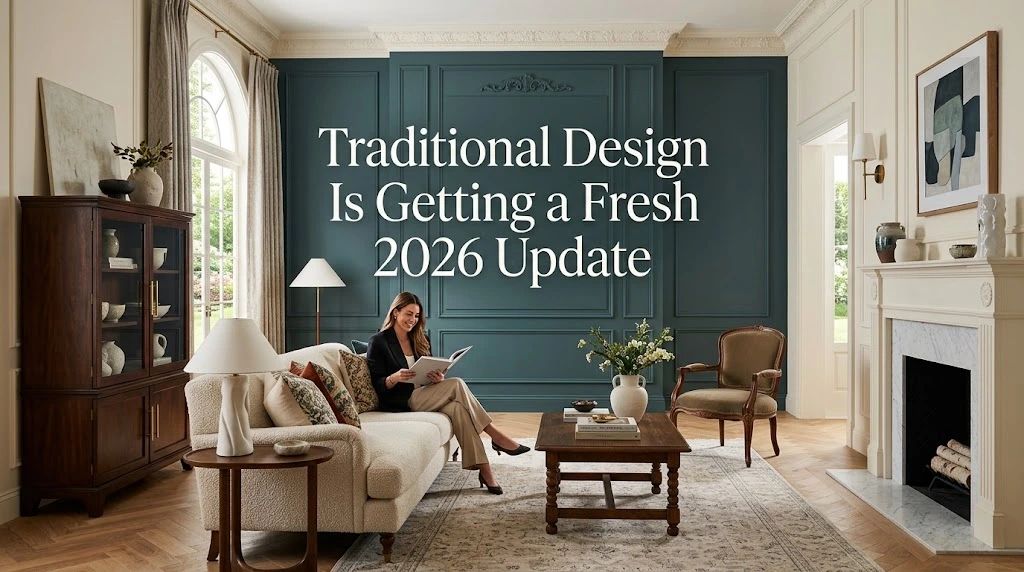
Traditional interiors are returning, but they do not look exactly like traditional rooms from the past.
The modern version combines classic details with relaxed furniture and contemporary comfort.
Think English country, modern Tudor, classic millwork, stained wood, arches, inset cabinetry, paneling, and heritage-inspired details, balanced with simpler modern pieces.
Houzz identified traditional details as a notable 2026 direction, including inset cabinetry, plate racks, arched range hoods, richer wood finishes, curves, paneling, and earthy colors.
The secret is restraint.
You do not need crown molding, patterned wallpaper, antique furniture, dark wood, brass hardware, and traditional artwork all in one room.
Choose one or two strong traditional features.
For example, modern kitchen cabinets can gain character from an arched niche and aged-brass hardware. A contemporary bedroom can feel more classic with wall paneling and a traditional bedside lamp.
This approach creates a home that feels established without becoming old-fashioned.
11. Small Rooms Are Becoming More Intentional
Small spaces do not need to imitate large rooms.
In fact, 2026 decorating ideas encourage homeowners to make compact rooms more purposeful and expressive.
A small dining room can become a cozy reading and dining space. A narrow hallway can become an art gallery. A tiny bedroom can use one dramatic wallpaper rather than several competing decorations.
The first step is measuring everything.
Before buying furniture, measure the room, door openings, walking paths, and available wall space. Interior design guidance continues to emphasize accurate measurements and practical furniture placement.
Then choose pieces that solve more than one problem.
A storage ottoman can provide seating and hidden storage. A console can work as a desk. A bench can sit at the foot of a bed and provide a place to put on shoes.
For small rooms, visual weight matters too.
A huge dark sofa may technically fit but still make the room feel cramped. A lighter-looking piece with raised legs may allow more of the floor to remain visible.
Common mistake: filling every corner because an empty corner feels unfinished.
Sometimes empty space is what allows the important pieces to breathe.
12. Wellness Spaces Are Becoming Part of Everyday Homes
Wellness is moving beyond the idea of having a beautiful bathroom.
In 2026, homeowners are increasingly creating spaces designed around rest, exercise, quiet, and recovery.
Houzz reported strong interest in wellness rooms and calming spaces, while searches for home gyms, yoga rooms, sensory rooms, and spa-like bathrooms also increased.
You do not need a dedicated wellness room.
A corner can be enough.
Create a simple morning space with a comfortable chair, small side table, soft lamp, plant, and place for books. Or turn part of a bedroom into a quiet stretching area.
In bathrooms, focus on sensory comfort. Soft towels, warm lighting, natural textures, organized storage, and a clear countertop can make the space feel calmer.
The best wellness design is practical.
If you never meditate, you do not need a meditation corner because an article says it is fashionable. Design around the activities that genuinely help you relax.
13. Sustainable Decorating Favors Quality Over Quantity
Sustainable decorating is becoming less about buying products labeled “eco-friendly” and more about making smarter decisions over time.
A durable sofa that lasts for years can be a better choice than a cheap sofa that needs replacing quickly. Repairing a wooden table can be better than replacing it simply because its finish looks dated.
Natural materials, vintage furniture, secondhand finds, responsible sourcing, and long-lasting pieces all fit naturally into this approach.
Houzz’s 2026 trend research identifies eco-friendly choices as an important part of evolving homeowner priorities, alongside natural materials and long-term design thinking.
Before buying something, ask:
- Will I still like this in five years?
- Can I repair it?
- Does it work with several decorating styles?
- Is the material durable?
- Do I already own something that serves the same purpose?
This mindset also helps your budget.
Buying fewer, better pieces often creates a more sophisticated room than constantly purchasing small decorations.
14. Smart Homes Are Becoming More Invisible
Technology is becoming part of home design, but the goal is increasingly to make it feel less obvious.
A room does not need to look like a technology showroom to be smart.
Good home technology should support comfort without taking over the visual design.
Think about:
- Smart lighting controls
- Automated blinds
- Energy monitoring
- Hidden charging stations
- Integrated speakers
- Smart thermostats
- Motion-sensitive lighting
- Home security systems
The important decorating principle is integration.
Hide cables where possible. Avoid placing too many devices on visible surfaces. Choose lighting systems that support different moods rather than simply making the room brighter.
AI is also entering the design process. Houzz reported that 22% of renovating homeowners in its 2026 research had used AI for projects, mainly to gather ideas, visualize concepts, and compare options.
AI can be useful for brainstorming, but it should not replace real measurements, material samples, lighting tests, or professional advice when structural work is involved.
A beautiful digital rendering does not guarantee that a room will function well in real life.
15. How to Use Decorating Trends for 2026 Without Making Your Home Look Trendy
The smartest way to follow decorating trends is not to copy an entire trend.
Instead, borrow the parts that fit your home and your lifestyle.
Start with permanent elements. If you are renovating a kitchen or bathroom, choose materials, layouts, cabinetry, and fixtures that you can live with for many years. Use smaller decorative pieces to experiment with changing tastes.
For example, if you love the warm brown trend, you do not necessarily need brown cabinets. Try a chocolate-colored chair, artwork, rug, or cushion first.
If you love curves, buy a round coffee table instead of replacing the entire living room.
If you like vintage design, add one antique lamp before filling the house with old furniture.
A useful formula for 2026 is:
70% timeless foundation + 20% personal character + 10% trend-driven accents.
That balance keeps a room current without making it feel temporary.
A simple room-by-room decorating plan
Living room: Start with a good rug, comfortable seating, layered lighting, natural materials, and personal artwork. Add one sculptural or vintage piece for character.
Bedroom: Focus on calm colors, soft textures, warm bedside lighting, quality bedding, and limited visual clutter.
Kitchen: Use warm wood, natural stone, traditional details, aged metals, or handmade-looking tile where appropriate. Prioritize function before decoration.
Bathroom: Create a spa-like atmosphere through lighting, storage, natural materials, and tactile surfaces rather than simply adding decorative objects.
Dining room: A statement light, textured wall, vintage furniture, or dramatic artwork can give the room personality without requiring a full renovation.
Entryway: Keep it practical. Add a mirror, useful storage, a small seat if space allows, and one memorable decorative element.
Decorating mistakes to avoid in 2026
Even beautiful trends can fail when they are used without considering the room.
Avoid these common mistakes:
- Buying every item from the same furniture collection
- Using too many accent colors
- Choosing furniture before measuring the room
- Hanging artwork too high
- Using rugs that are too small
- Depending on one harsh ceiling light
- Filling every surface with accessories
- Copying a trend that does not suit your lifestyle
- Choosing fragile materials for high-traffic areas
- Renovating permanent features around a short-lived trend
One especially useful principle is to mix sources. A room filled entirely with pieces from one retailer can look like a showroom. Combining new furniture with vintage finds, handmade objects, artwork, and personal belongings creates a much more individual result.
Final decorating checklist
Before you call a room finished, walk through this list:
- Does the room work for its main purpose?
- Is the furniture correctly sized?
- Is there enough walking space?
- Does the lighting work during both day and night?
- Do the colors connect naturally?
- Are there enough textures?
- Is there something personal in the room?
- Does the room have a clear focal point?
- Have you left enough visual breathing room?
- Would you still enjoy the design if the current trend disappeared?
That last question is especially important.
The best home is not the one that looks newest. It is the one that continues to feel good after the novelty wears off.
Conclusion: Decorating Trends for 2026 Are About Feeling at Home
The most exciting decorating trends for 2026 are not really about chasing something new every season. They are about creating homes with warmth, character, comfort, texture, and purpose.
Earthy colors are making rooms feel more grounded. Natural materials are bringing tactile beauty. Curves are softening rigid interiors. Vintage pieces are adding stories. Layered lighting is improving atmosphere. Wellness spaces are helping homes support everyday life.
At the same time, personalization is becoming more important than perfection.
That may be the biggest lesson of all.
Your home does not need to look like a showroom, a magazine spread, or someone else’s Pinterest board. It should reflect how you actually live.
If you are decorating in 2026, start slowly. Keep the pieces that work. Repair what you can. Add meaningful objects. Invest in materials you will enjoy for years. Then use trends as inspiration rather than rules.
When you do that, your home can feel current without losing its personality—and that is a decorating style that is unlikely to go out of fashion.
FAQs About Decorating Trends for 2026
1. What is the biggest decorating trend for 2026?
Warm, layered, personalized interiors are among the strongest decorating directions for 2026. Designers are moving away from stark white-and-gray rooms toward earthy colors, natural materials, tactile surfaces, vintage details, and spaces with more personality.
2. What colors will be popular for home decor in 2026?
Warm earthy shades are particularly prominent, including chocolate brown, rust, terracotta, mushroom, taupe, cream, sage, olive, and other nature-inspired colors. You do not need to use all of them; one or two accents can create the same effect.
3. Is gray still popular in interior design in 2026?
Gray has not disappeared, but cool gray is no longer the only safe neutral. Warmer neutrals such as taupe, mushroom, cream, beige, and brown are gaining attention because they create softer and more welcoming interiors.
4. Are curves still a decorating trend in 2026?
Yes. Curved furniture and architectural details remain important, with growing interest in rounded islands, arches, scalloped tile, curved staircases, and other soft geometric forms.
5. What materials are trending in home decor for 2026?
Natural stone, warm wood, plaster, linen, terracotta, handmade-looking tile, seagrass, wool, and other tactile materials are receiving strong attention. The broader trend is toward materials that show texture, variation, and craftsmanship.
6. How can I make my home look modern without remodeling?
Focus on changes that have a large visual impact without permanent construction. Update lighting, rugs, curtains, artwork, cushions, paint, hardware, plants, and a few decorative pieces. Adding one vintage or sculptural item can also give a room a more current, collected feel.
7. What is replacing minimalist home decor in 2026?
Rather than completely replacing minimalism, 2026 is bringing a more relaxed version of simplicity. Layered minimalism, collected interiors, warm materials, personal objects, vintage pieces, and tactile surfaces are helping rooms feel more comfortable without becoming cluttered.