Fashion has a funny way of becoming part of our lives without asking permission. A jacket can remind you of a special night. A certain dress can change how you carry yourself. Even a simple white shirt can feel completely different when it comes from a designer who understands cut, fabric, and proportion.
Behind many of the clothes we recognize today are designers who changed the way people think about getting dressed. Some built luxury fashion houses that became global names. Others challenged traditional ideas about gender, beauty, tailoring, or everyday clothing. A few changed fashion through one unforgettable silhouette, while others created entire design philosophies that still influence modern wardrobes.
Learning about famous clothing designers is not only useful if you love luxury fashion. It can also help you understand why certain clothes look timeless, why some trends return decades later, and how professional designers turn an ordinary idea into something memorable.
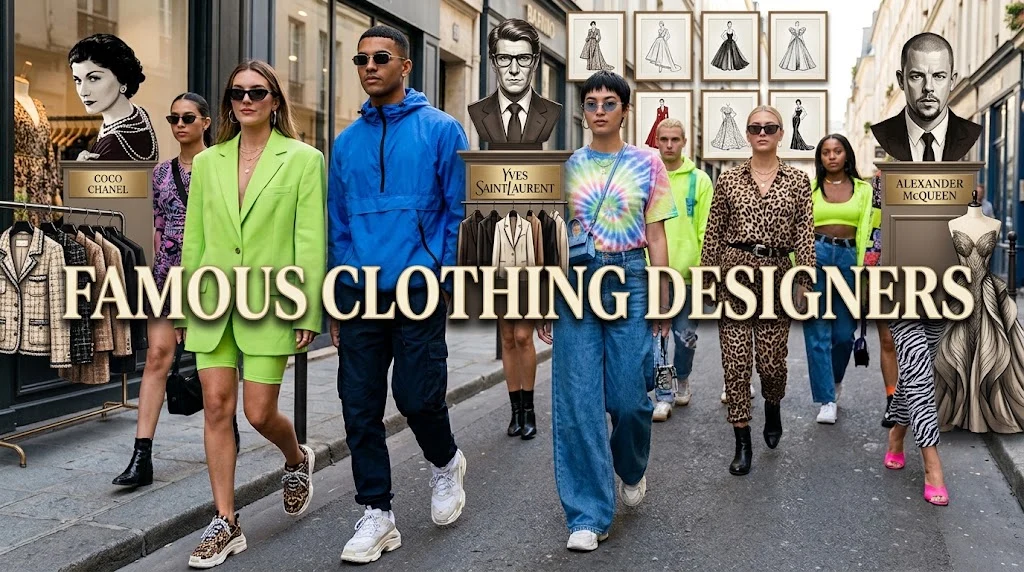
From Coco Chanel and Christian Dior to Giorgio Armani, Vivienne Westwood, Ralph Lauren, Alexander McQueen, and modern creative forces, each designer has a different story to tell. Their work can also teach us practical lessons about personal style.
What Makes a Clothing Designer Famous?
Being famous in fashion is about more than having a recognizable name. A designer usually becomes influential because their work introduces something distinctive, changes consumer behavior, shapes trends, or leaves a lasting mark on fashion history.
Some designers become known for a particular technique. Others develop a signature silhouette, color palette, fabric choice, or approach to tailoring. A designer might also become famous by creating a fashion house that continues to influence the industry long after the founder is gone.
For example, Coco Chanel became closely associated with relaxed elegance, practical luxury, and designs that challenged restrictive women’s clothing. Christian Dior became famous for the dramatic feminine silhouettes associated with his early postwar collections. Giorgio Armani became strongly linked with soft tailoring and understated sophistication.
There is another important point: fame and influence are not exactly the same thing. A designer can be widely recognized by the public, while another may be highly respected within the fashion industry without being a household name.
When studying a designer, look beyond celebrity status. Ask:
- What did this designer change?
- What design elements became their signature?
- Which garments are strongly associated with their work?
- Did their ideas influence other designers?
- Are their designs still relevant today?
Those questions give you a much clearer picture of a designer’s importance than popularity alone.
Coco Chanel and the Rise of Modern Women’s Fashion
Coco Chanel remains one of the most recognizable names in fashion history. Born Gabrielle Chanel, she developed a design language that emphasized simplicity, comfort, movement, and understated elegance.
Her influence can be seen in several fashion staples. The little black dress, Chanel-style tweed jackets, costume jewelry, and practical jersey garments all became important parts of the visual language associated with her brand.
One reason Chanel’s work continues to attract attention is that she understood how clothing affected everyday life. Her designs often moved away from heavily structured clothing and embraced a more relaxed approach.
Her styling philosophy offers a useful lesson for modern wardrobes: not every outfit needs to look complicated to look polished.
Try applying that idea with a simple outfit. A well-cut jacket, straight-leg trousers, a plain top, and one carefully chosen accessory can look more intentional than an outfit overloaded with details.
Chanel also understood the power of consistency. Her brand developed recognizable elements that could evolve without losing their identity.
For personal style, that means finding two or three elements that feel yours naturally. Perhaps you always prefer gold jewelry, structured bags, monochrome outfits, or tailored jackets. Repeating those details can create a recognizable personal signature.
Christian Dior and the New Look
Christian Dior changed the direction of women’s fashion after World War II. His 1947 collection became associated with what became known as the New Look, a style characterized by a defined waist, rounded shoulders, and fuller skirts.
The look represented a dramatic contrast to the fabric-saving silhouettes common during wartime. Dior’s designs brought a sense of glamour and theatrical femininity back into high fashion.
What makes Dior particularly interesting is his understanding of proportion. The success of a dramatic silhouette often depends less on individual pieces and more on how they work together.
That lesson still applies today.
If you wear a voluminous skirt, for example, you might balance it with a fitted or neatly tucked top. If you choose wide-leg trousers, a shorter jacket or more defined waist can create visual balance.
You do not need a designer wardrobe to use designer thinking.
Think about:
- Proportion: How wide, narrow, long, or short are your pieces?
- Structure: Where does the garment create shape?
- Balance: Does one part of the outfit visually overwhelm another?
- Movement: Can you actually walk and sit comfortably?
Dior’s legacy demonstrates that clothing can communicate an entire mood through shape alone.
Giorgio Armani and the Art of Soft Tailoring
Giorgio Armani became famous for redefining tailoring with a softer, more relaxed approach. His work helped popularize sophisticated clothing that looked polished without feeling excessively rigid.
Traditional tailoring often relies on strong structure. Armani’s approach softened those lines, creating jackets and suits that could feel more fluid and comfortable.
This idea became especially influential in menswear, while also shaping women’s tailoring.
For everyday dressing, Armani’s design philosophy offers an excellent reminder that comfort and elegance do not have to compete.
A soft blazer can work with jeans. Relaxed trousers can look refined with a crisp shirt. A simple knit can become polished when paired with carefully chosen shoes and accessories.
The key is fit.
A relaxed garment should still look intentional. Oversized clothing becomes stylish when the proportions are controlled. If the jacket is loose, consider keeping another part of the outfit cleaner and more streamlined.
A common mistake is assuming that expensive tailoring automatically looks good. It does not. Even a luxury jacket can look awkward if the shoulders are wrong or the sleeves are too long.
Fit should always come first.
Ralph Lauren and the American Fashion Dream
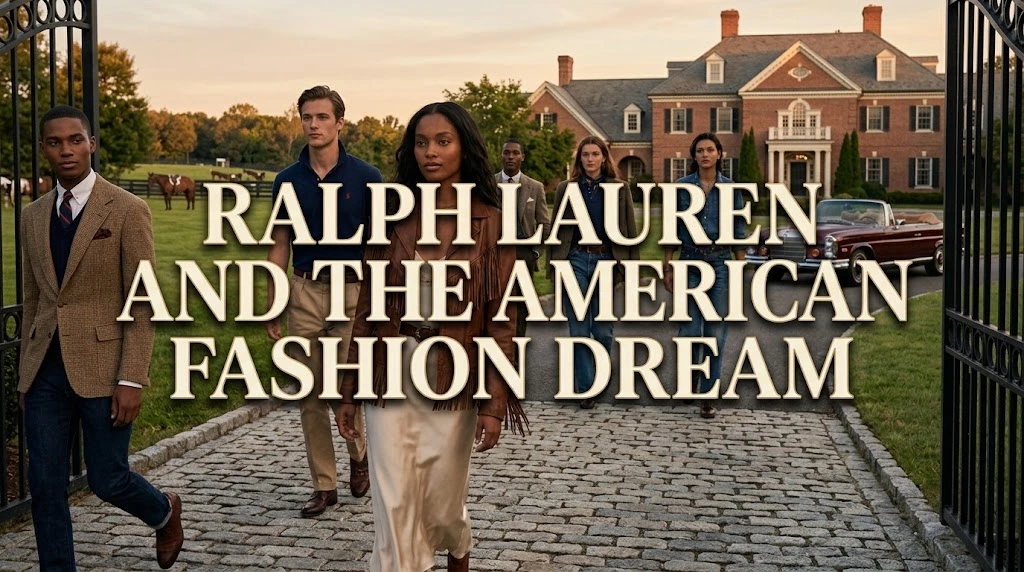
Ralph Lauren built a fashion identity around an idealized version of American life. His designs became closely associated with classic sportswear, polo-inspired clothing, preppy style, country influences, and polished casual dressing.
One of the most interesting parts of Lauren’s work is that he did not simply sell individual garments. He created a lifestyle image.
A polo shirt was not presented as just a shirt. It could represent a particular way of living, from country clubs to relaxed weekends and classic American sportswear.
That approach changed how many fashion brands communicate with customers.
You can use the same principle when building your own wardrobe. Instead of buying random pieces because they are currently popular, ask yourself what kind of visual story you want your clothes to tell.
Perhaps you want your style to feel:
- Classic and polished
- Relaxed and effortless
- Feminine and romantic
- Minimal and modern
- Artistic and experimental
- Sporty and casual
Once you identify that direction, shopping becomes easier.
Instead of asking, “Is this trendy?” ask, “Does this fit the style I am building?”
That small change can prevent many unnecessary purchases.
Alexander McQueen and Fashion as Art
Alexander McQueen brought a dramatic and highly artistic perspective to fashion. His collections often explored themes such as history, nature, beauty, conflict, identity, and mortality.
McQueen’s work demonstrated that fashion could function as more than clothing. A runway collection could tell a story, create emotion, and challenge the audience.
His tailoring was also highly respected. Despite the theatrical elements surrounding many collections, craftsmanship remained central to his work.
For everyday fashion lovers, McQueen offers an important lesson: clothing can express personality without being practical in every traditional sense.
You do not need to wear an elaborate runway piece to bring creativity into your wardrobe. Instead, experiment with one unexpected element.
For example:
- Pair a classic outfit with sculptural earrings.
- Wear an unusual jacket over a simple outfit.
- Choose shoes with an interesting shape.
- Add a dramatic coat to an otherwise minimal look.
- Experiment with texture rather than bright color.
The goal is not to copy McQueen’s runway designs. It is to understand the power of contrast and storytelling.
One distinctive element can make an ordinary outfit memorable.
Vivienne Westwood and Rebellious Fashion
Vivienne Westwood played a major role in bringing punk aesthetics into high fashion. Her work questioned conventional ideas about tailoring, historical dress, sexuality, authority, and social norms.
Westwood’s designs frequently combined historical references with rebellious styling. Corsetry, tartan, draping, exaggerated silhouettes, and unconventional proportions appeared throughout her work.
Her influence shows that fashion does not always need to be polite or predictable.
For someone building a personal wardrobe, that can be surprisingly useful. If every piece you own looks safe and similar, your outfits may lack personality.
Try adding one element that breaks the pattern.
A tailored outfit might work with chunky boots. A feminine dress might look interesting with a structured jacket. A classic shirt could become more expressive when worn with an unusual belt or statement jewelry.
The important thing is intentional contrast.
Rebellious fashion does not mean wearing something uncomfortable simply to attract attention. It means understanding traditional style rules well enough to decide when you want to bend them.
Gianni Versace and Bold Italian Glamour
Gianni Versace became known for bold prints, strong colors, glamorous silhouettes, and a confident approach to fashion.
Versace’s designs often embraced visual drama rather than hiding from it. His work demonstrated that fashion could be sensual, energetic, and unapologetically noticeable.
That philosophy can be useful when styling for parties, vacations, evening events, or celebrations.
The biggest mistake with bold fashion is assuming that every element needs to be bold at the same time.
Usually, one strong feature is enough.
Whether your dress has a dramatic print, keep your accessories relatively simple. If you choose statement earrings, you may not need a large necklace. If your shoes are highly decorative, let them become the focus.
This creates a simple styling principle:
Choose a focal point, then support it.
That approach allows you to enjoy expressive clothing without making the outfit feel visually chaotic.
Versace’s legacy also reminds us that confidence is part of styling. A dramatic garment only works when you feel comfortable wearing it.
Donatella Versace and the Evolution of a Fashion House
Donatella Versace became an important creative force in the development of the Versace fashion house following the death of her brother Gianni Versace.
Her work continued many recognizable elements associated with the brand while also adapting them for changing audiences and contemporary fashion.
This illustrates an important part of fashion that people sometimes overlook: a fashion house can evolve without completely abandoning its identity.
Modern designers constantly face this challenge. If they change too much, customers may no longer recognize the brand. If they change too little, the brand can feel disconnected from current culture.
The same balance matters in your personal wardrobe.
You do not need to replace your entire style every season.
Instead, update your wardrobe gradually. Keep the pieces that still represent you and introduce a few contemporary elements.
For example, someone with a classic wardrobe might update their look through a modern handbag, new footwear shape, or updated trouser silhouette.
Good personal style is often evolutionary rather than revolutionary.
Valentino and Romantic Fashion
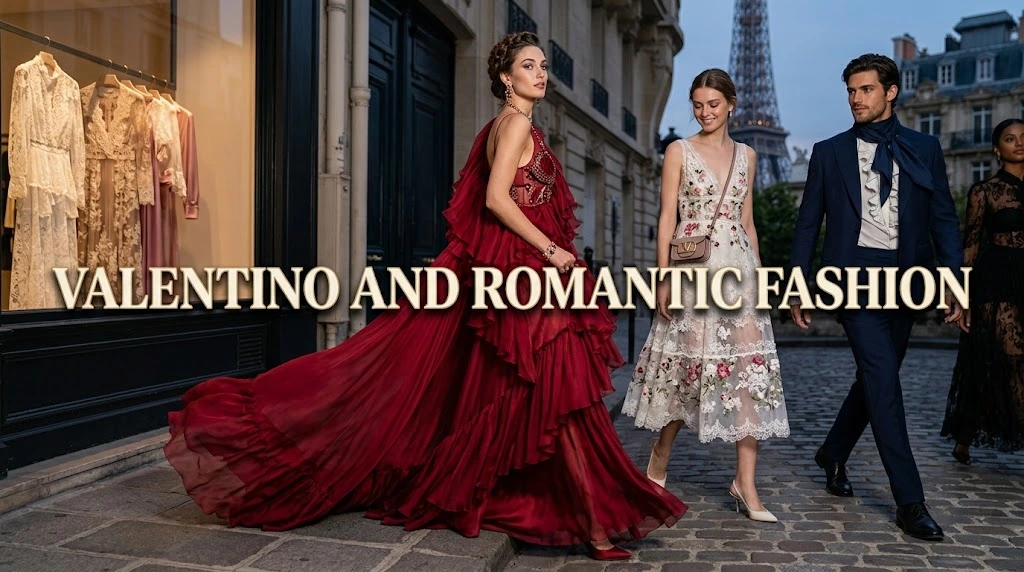
Valentino Garavani became strongly associated with romantic eveningwear, elegant gowns, refined construction, and a distinctive approach to color.
The name Valentino is also closely connected with Valentino red, a vivid red shade that became an important part of the fashion house’s identity.
Romantic fashion is not limited to formal dresses. You can bring the same feeling into everyday outfits through fabric and shape.
Try:
- Soft blouses
- Flowing skirts
- Draped dresses
- Delicate jewelry
- Satin or silk-like textures
- Feminine footwear
- Subtle floral patterns
The trick is avoiding too many romantic details at once.
A flowing blouse with tailored trousers can feel modern. A floral dress with simple shoes can look polished rather than overly decorative.
If you love feminine clothing but want it to feel contemporary, mix romantic pieces with structured or minimal items.
That contrast creates balance.
Hubert de Givenchy and Elegant Simplicity
Hubert de Givenchy is remembered for refined designs that combined elegance with simplicity. His work became particularly associated with actress Audrey Hepburn, whose public image helped make several Givenchy designs iconic.
The relationship between designer and celebrity is an important part of fashion history. A garment can become culturally powerful when it appears at the right moment on the right person.
Givenchy’s work also demonstrates the importance of restraint.
Sometimes the most memorable outfit is not the one with the most decoration. A beautifully cut dress in a simple color can have more visual impact than an outfit covered in embellishments.
This is especially useful when dressing for formal occasions.
Before adding another accessory, look at the outfit as a whole. Ask whether the new piece improves the appearance or simply adds more information.
A polished wardrobe often depends on knowing when to stop.
Yves Saint Laurent and Modern Women’s Style
Yves Saint Laurent played a major role in expanding the possibilities of women’s fashion. He became associated with ideas such as women’s tuxedos, safari-inspired clothing, and designs that combined traditionally masculine tailoring with feminine styling.
The famous Le Smoking tuxedo is one example of how a designer can challenge expectations about what women should wear.
The broader lesson is powerful: clothing does not have to stay inside old categories.
Today, women routinely mix tailored jackets with dresses, sneakers with skirts, oversized shirts with fitted trousers, and traditionally masculine pieces with feminine accessories.
You can use this approach to create outfits that feel modern without chasing every trend.
Try combining one traditionally structured piece with something softer. A tailored blazer with a flowing skirt is an easy starting point. So is a crisp button-down shirt with relaxed denim.
The contrast creates interest while keeping the outfit wearable.
Modern Famous Clothing Designers to Know
Fashion continues to change, and the list of influential designers is much larger than the names commonly found in fashion history books.
Designers such as Stella McCartney, Phoebe Philo, Virgil Abloh, Demna, and Dries Van Noten have each contributed different ideas to contemporary fashion.
Stella McCartney has been strongly associated with luxury fashion that avoids the use of leather and fur. Phoebe Philo became known for minimalist yet distinctive womenswear and a highly influential approach to modern wardrobe dressing.
Virgil Abloh blurred boundaries between streetwear, luxury, art, music, and popular culture. His work helped demonstrate how strongly streetwear could influence luxury fashion.
Demna became known for questioning traditional ideas about luxury and creating fashion that often played with proportion, irony, everyday clothing, and cultural references.
Dries Van Noten has built a reputation around sophisticated prints, color combinations, textiles, and layered styling.
The useful lesson is that contemporary fashion has no single definition of luxury or creativity.
Different designers solve different design problems.
That is why exploring several designers is more valuable than copying one.
How to Identify a Designer’s Signature Style
If you are studying famous fashion designers, try to identify their signature language rather than memorizing names.
Look at five areas.
Silhouette: Does the designer prefer fitted, oversized, structured, flowing, or exaggerated shapes?
Color: Are certain colors repeated across collections?
Fabric: Does the designer rely heavily on denim, silk, wool, leather alternatives, jersey, lace, or technical materials?
Details: Look for buttons, pockets, embroidery, prints, seams, hardware, or unusual construction.
Mood: Is the overall feeling romantic, rebellious, minimal, sporty, dramatic, traditional, or experimental?
This method works especially well when studying fashion history.
For example, if you see a collection with extremely recognizable tailoring, dramatic proportions, or a recurring print language, ask what design decisions created that identity.
You can also use this technique when shopping.
Instead of searching for a specific designer name, search for the design characteristic you like.
Whether you love soft tailoring, search for relaxed blazers. whether you love romantic silhouettes, search for draped dresses. If you prefer minimal fashion, look for clean lines and limited detailing.
This turns fashion knowledge into practical shopping knowledge.
How Famous Designers Influence Everyday Clothing
Designer fashion may appear distant from an ordinary wardrobe, but many everyday trends begin or gain momentum through high fashion.
Ideas often move from couture and luxury collections into ready-to-wear, then into mainstream retail and eventually into everyday street style.
A runway silhouette may inspire a more affordable version of a jacket. A designer’s color combination may influence seasonal collections. A tailoring technique may appear in mass-market clothing years later.
This is one reason old fashion trends repeatedly return.
Wide trousers, mini skirts, tailored suits, platform shoes, denim styles, oversized jackets, and statement accessories have all moved through different periods of popularity.
The smartest way to use fashion history is not to recreate an entire decade from head to toe.
Instead, borrow one idea.
For example, if you love the polished tailoring of a certain era, add a structured blazer to a modern outfit. If you like vintage romantic fashion, introduce a soft blouse rather than wearing a completely vintage-inspired outfit.
This keeps your wardrobe current while still giving it personality.
How to Dress Like a Designer Without Buying Designer Clothes
You do not need a luxury budget to use lessons from famous clothing designers.
In fact, many of the most useful styling principles cost nothing.
Start with fit. A reasonably priced garment can look polished when it fits your body well. An expensive garment can look poor when the proportions are wrong.
Next, pay attention to fabric appearance. Look for materials that hold their shape appropriately, resist excessive wrinkling, and feel comfortable against your skin.
Then build around reliable basics.
A useful wardrobe might include:
- A well-fitting pair of trousers
- Straight or relaxed denim
- A simple white or neutral shirt
- A versatile blazer
- A quality everyday sweater
- A dress that suits your lifestyle
- Comfortable polished shoes
- One practical everyday bag
- A few accessories you genuinely enjoy
Once those pieces work together, trends become easier to add.
For example, you can introduce a seasonal color through a scarf or handbag instead of buying an entirely new wardrobe.
This approach is more practical, more affordable, and often more sustainable.
Common Mistakes When Following Designer Fashion
One common mistake is copying a runway outfit exactly.
Runway fashion is often designed to communicate a concept. It may use exaggerated proportions, dramatic makeup, unusual footwear, or styling that is not intended for ordinary daily life.
Instead of copying the complete look, identify the idea behind it.
Another mistake is believing that a famous label automatically guarantees good style.
A designer name does not remove the need for proper fit, proportion, comfort, and occasion awareness.
A third mistake is wearing too many statement pieces together.
If everything demands attention, nothing becomes the focal point.
There is also a tendency to chase every designer-inspired trend. This can create an expensive wardrobe that does not actually feel personal.
Finally, avoid ignoring practicality.
The best outfit for a formal dinner may not be the best outfit for a long day of walking. The right clothing depends on your body, lifestyle, climate, occasion, and comfort.
Use designer fashion as inspiration, not as a set of strict rules.
How to Choose a Famous Designer to Study or Follow
If you are new to fashion history, start with designers whose work matches your interests.
For tailoring, look at Armani and Yves Saint Laurent.
For American sportswear and lifestyle dressing, study Ralph Lauren.
You can make your study more interesting by choosing one designer each week and examining several collections from different periods.
Do not only look at the clothes. Notice the styling, photography, runway setting, fabric choices, accessories, and cultural context.
Then ask yourself what you would actually wear.
That final question matters because fashion knowledge becomes much more useful when you can translate it into your own wardrobe.
The goal is not to become a walking advertisement for a fashion house. The goal is to understand design well enough to make better choices for yourself.
Conclusion: What Famous Clothing Designers Can Teach Us About Personal Style
The history of famous clothing designers is really a history of changing ideas about clothing, identity, beauty, culture, and everyday life.
Chanel showed the lasting power of simplicity and practical elegance. Dior demonstrated the emotional impact of silhouette. Armani transformed ideas about tailoring and softness. Ralph Lauren built a powerful lifestyle around American sportswear. McQueen showed how fashion could become visual storytelling, while Westwood proved that clothing could challenge conventions.
Other designers brought their own perspectives, from Versace’s bold glamour and Valentino’s romance to Givenchy’s refined simplicity and Yves Saint Laurent’s expansion of women’s tailoring.
You do not have to own designer clothing to benefit from any of this.
Study the way designers use proportion. Notice how they combine colors. Pay attention to fabric, construction, and styling. Most importantly, learn to recognize what genuinely works for you.
Great personal style is not about wearing the most expensive label in the room. It is about understanding clothing well enough to choose pieces that fit your life, express your personality, and make you feel comfortable in your own skin.
FAQs
1. Who are some of the most famous clothing designers?
Some widely recognized designers include Coco Chanel, Christian Dior, Giorgio Armani, Ralph Lauren, Alexander McQueen, Vivienne Westwood, Gianni Versace, Valentino Garavani, Hubert de Givenchy, and Yves Saint Laurent. Contemporary fashion also includes influential designers such as Stella McCartney, Phoebe Philo, Virgil Abloh, Demna, and Dries Van Noten.
2. Who is considered one of the most influential fashion designers in history?
Influence depends on the period and the part of fashion being studied. Chanel, Dior, Saint Laurent, Armani, and other major designers have had significant and well-documented effects on clothing design, tailoring, womenswear, luxury fashion, or popular style.
3. What makes a fashion designer famous?
A designer can become famous through distinctive designs, technical innovation, cultural influence, a successful fashion house, celebrity associations, memorable runway collections, or long-term impact on clothing trends.
4. What is the difference between a fashion designer and a clothing brand?
A fashion designer is an individual who creates or develops clothing concepts and designs. A fashion brand is a business identity that may include clothing, accessories, fragrances, marketing, retail, and other products. Some brands are strongly connected to their founding designers, while others continue under different creative directors.
5. How can I learn about famous fashion designers?
Start by studying their biographies, major collections, signature designs, and the historical period in which they worked. Fashion museums, reputable fashion publications, exhibition archives, and books about fashion history can provide useful context. Comparing designers side by side also makes their differences easier to understand.
6. Do I need designer clothes to dress stylishly?
No. Designer collections can provide inspiration, but stylish dressing depends on factors such as fit, proportion, coordination, fabric, color, occasion, and personal preference. Well-chosen affordable clothing can look polished when the pieces fit properly and work together.
7. How can famous designers improve my personal style?
Study their design principles instead of simply copying their outfits. You might borrow a designer’s approach to tailoring, color, proportion, layering, or accessories. Then adapt that idea to your own lifestyle, budget, comfort, and personality. That creates a wardrobe that feels personal rather than copied.