
Shoes have a funny way of changing an entire outfit. You can wear the simplest jeans and T-shirt, add the right pair of shoes, and suddenly the whole look feels more polished. That is why keeping an eye on trend shoes is not really about chasing every new fashion craze. It is about knowing which styles are worth wearing and how to make them work with clothes you already own.
Today, footwear trends move quickly. One season, slim sneakers are everywhere. The next, people are reaching for chunky soles, retro trainers, sleek loafers, ballet flats, or statement boots. Yet the best shoe trends do more than look good in a social media photo. They feel comfortable, suit your lifestyle, and give you enough styling options to wear them again and again.
I have always found that the smartest approach to footwear is a mix of trend and practicality. You do not need ten pairs of fashionable shoes. A few well-chosen styles can take you from casual mornings to office days, dinners, parties, and weekend plans.
This guide breaks down the most useful shoe trends, how to style them, what to buy, common mistakes to avoid, and how to choose footwear that actually suits you.
What are trend shoes?
Trend shoes are footwear styles that have become especially popular because of current fashion movements, designer collections, celebrity styling, social media, street style, or changing consumer preferences. The category can include sneakers, boots, loafers, flats, sandals, heels, and other everyday footwear.
However, a shoe does not have to be extremely unusual to be trendy. Sometimes a small change makes a familiar style feel fresh. A classic sneaker might return with a slimmer shape. A loafer might feature a thicker sole. A ballet flat might appear with modern straps or a sporty finish.
The important thing is to understand the difference between a short-lived trend and a style with staying power.
A very dramatic shoe may dominate fashion for a few months but become difficult to wear later. On the other hand, retro sneakers, loafers, simple boots, and clean leather flats can often stay useful long after their moment in the spotlight.
When shopping for fashionable footwear, ask yourself three questions:
- Can I wear this with at least three outfits?
- Is it comfortable enough for my normal routine?
- Would I still like it if social media stopped showing it tomorrow?
If the answer is yes, you probably have a worthwhile addition to your wardrobe.
The biggest shoe trends to watch
Modern footwear trends cover a wide range of styles, which is good news because you do not need to dress a certain way to participate.
Retro-inspired sneakers remain an easy choice for people who like casual fashion. Their vintage shape works especially well with straight-leg jeans, relaxed trousers, denim skirts, and simple dresses.
Loafers continue to offer another strong option. They add structure to an outfit without feeling as formal as traditional dress shoes. Try them with tailored pants for work or with jeans for a more relaxed look.
Ballet flats have also become an important part of the modern wardrobe. Their lightweight appearance works beautifully with cropped trousers, midi skirts, dresses, and denim.
Boots remain essential when temperatures drop. Sleek ankle boots create a cleaner silhouette, while riding-inspired or knee-high boots can make a simple winter outfit feel more intentional.
Other styles worth watching include:
- Sporty sneakers
- Mary Jane flats
- Square-toe shoes
- Minimal sandals
- Platform footwear
- Low-profile trainers
- Modern clogs
- Pointed-toe flats
- Statement heels
- Chunky loafers
The trick is not to wear all of these at once. Choose the trend that complements your existing wardrobe.
Trendy sneakers for everyday outfits
Sneakers are probably the easiest place to experiment with current footwear trends. They work for errands, travel, casual offices, coffee dates, shopping trips, and relaxed weekends.
The most useful trendy sneakers are usually those that combine a fashionable shape with everyday comfort. A pair that looks fantastic but hurts after twenty minutes will spend most of its life sitting in your closet.
For a casual outfit, try retro-style sneakers with straight-leg denim and a simple tucked-in shirt. Add a lightweight jacket and a structured bag to keep the outfit from looking too basic.
You can also dress sneakers up slightly. Pair a clean, low-profile sneaker with wide-leg trousers and a fitted knit top. The contrast between relaxed footwear and polished clothing creates a modern look without trying too hard.
For summer, sneakers can work with dresses too. A simple cotton or slip-style dress paired with understated trainers gives the outfit a youthful, effortless feel.
When choosing sneakers, pay attention to:
- Arch and heel support
- Sole flexibility
- Breathable materials
- Proper toe-room
- Weight
- Cushioning
- Your normal walking distance
A fashionable sneaker should support your lifestyle rather than force you to change it.
Trendy boots for fall and winter
Boots have a special advantage: they can change the mood of an outfit instantly. A simple pair of ankle boots can make jeans look sharper, while tall boots can add drama to a skirt or dress.
For everyday wear, ankle boots are one of the safest investments. Black, brown, tan, and dark neutral shades are particularly versatile.
Wear ankle boots with straight jeans and a sweater for an easy weekend outfit. For a more polished look, tuck slim trousers into sleek boots and add a long coat.
Knee-high boots work especially well with skirts and dresses. A midi skirt with tall boots creates a graceful transition between the hemline and footwear. You can add tights when the weather becomes colder.
If you prefer a more relaxed style, chunky boots can add visual weight to oversized clothing. They look particularly good with wide-leg jeans, cargo pants, oversized jackets, and knitwear.
One common mistake is choosing boots only because they look fashionable. Check the shaft height, heel stability, material, and fit around your calf before buying.
If you live somewhere with frequent rain, practical features matter even more. Water-resistant materials, textured soles, and easy-to-clean finishes can make a trendy boot much more useful.
Loafers, flats, and polished shoe trends
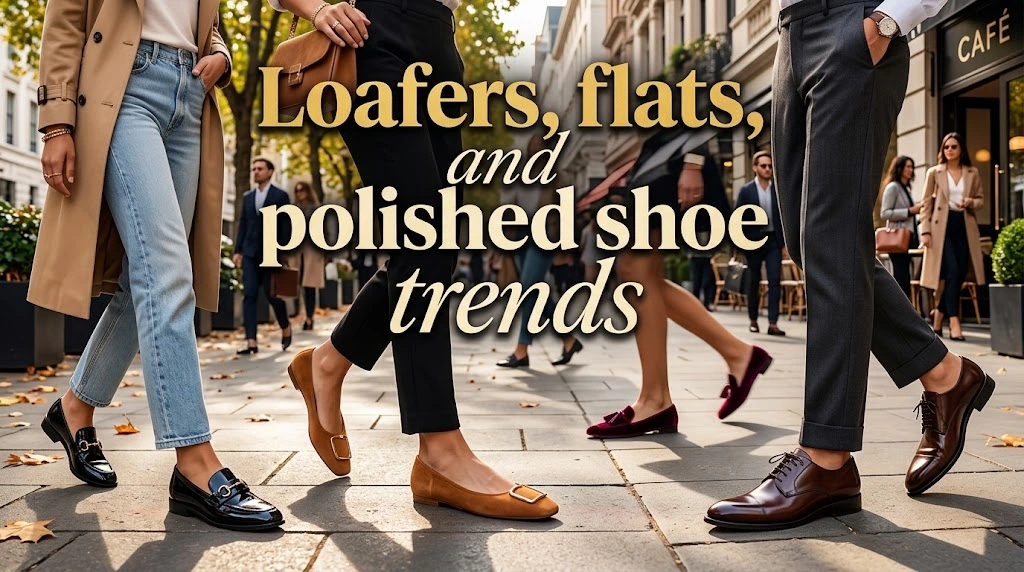
Not every fashionable shoe needs a sporty appearance. Loafers and flats offer an excellent way to make everyday outfits look refined.
Loafers are especially useful because they sit between casual and formal. You can wear them with jeans, trousers, skirts, or dresses.
For a classic outfit, combine black loafers with tailored trousers, a white shirt, and a simple belt. For something more relaxed, wear chunky loafers with straight jeans and a soft sweater.
Ballet flats create a different effect. They look light and feminine and work well when you want your outfit to feel less structured.
Mary Jane flats are another option if you enjoy vintage-inspired fashion. The strap adds visual interest while keeping the overall shoe fairly simple.
When wearing flats, consider your proportions. If you are wearing very wide trousers, a delicate flat can sometimes disappear underneath the fabric. A slightly more substantial shoe may create better balance.
Likewise, a slim trouser can look elegant with a sleek flat.
The goal is not to follow one universal rule. Look at the entire silhouette, from your shoulders to your hemline and finally to your shoes.
Trend shoes for women
Women’s footwear trends offer plenty of variety because modern fashion no longer depends on one dominant shoe shape.
Some women prefer minimalist footwear, while others enjoy platforms, bright colors, metallic finishes, or dramatic heels. Both approaches can work.
For a practical wardrobe, build around a few categories:
- Everyday sneakers
- Comfortable flats
- A polished loafer
- An ankle boot
- A dressier shoe
- A warm-weather sandal
Then add one trend-driven pair when you want to experiment.
For example, if your wardrobe is mostly neutral, a metallic flat or colorful sneaker can become the interesting part of your outfit. If your clothes already contain strong prints and bright colors, a simple shoe may create better balance.
Comfort also matters differently depending on the shoe. A casual sneaker might be worn for hours, while a party heel may only need to be comfortable for a few hours.
Do not judge a shoe only by its appearance in a product photo. Think about where you will wear it, what you will wear it with, and how long you will realistically keep it on.
Trend shoes for men
Men’s footwear trends have also moved toward greater variety. Traditional dress shoes remain useful, but sneakers, loafers, boots, and hybrid styles now play a major role in everyday dressing.
A clean sneaker can work with jeans, chinos, relaxed trousers, and even some suits when the setting allows it. The key is keeping the shoe clean and choosing a shape that matches the clothing.
Loafers are excellent for smart-casual outfits. Try them with chinos and a knit polo, or pair them with tailored trousers and an Oxford-style shirt.
Chelsea-style boots remain useful because their simple shape works across casual and dressed-up outfits. Chukka-style boots offer another versatile choice for men who want something less formal.
One useful rule is to consider the visual weight of the shoe. Heavy sneakers tend to work better with relaxed trousers, while slim shoes can look more natural with tailored pants.
Avoid forcing a very sporty shoe into a formal outfit simply because it is fashionable. Fashion works best when the pieces make sense together.
How to choose trend shoes for your personal style
The best shoe trend is not necessarily the one everyone else is wearing. It is the one that fits your personal style.
Start by looking at the clothes you already wear most often. If your wardrobe contains jeans, relaxed trousers, T-shirts, and casual jackets, sneakers may give you more value than delicate heels.
If you regularly wear office clothing, loafers, polished flats, ankle boots, or low heels may make more sense.
If you love dresses and skirts, consider ballet flats, Mary Janes, sandals, or tall boots.
Your lifestyle matters just as much.
Someone who walks to work needs different shoes from someone who drives everywhere. Someone who spends weekends outdoors needs different footwear from someone who attends dinners and social events.
Before buying a trend shoe, imagine three real outfits you could wear with it. If you cannot think of three, pause before spending money.
Also consider your color palette. Neutral footwear usually gives you more outfit combinations, while statement colors can make a smaller wardrobe feel more varied.
How to style trend shoes with jeans
Jeans and shoes are one of the most important combinations in everyday fashion. The right pairing can make an ordinary outfit look carefully styled.
Straight-leg jeans are particularly versatile. They work with sneakers, loafers, ankle boots, ballet flats, and sandals.
Wide-leg jeans need a little more attention. A slightly heavier sneaker, platform, boot, or substantial loafer can balance the width of the denim.
Skinny jeans can work with ankle boots, slim sneakers, loafers, and flats. If the jeans end above the ankle, the shoe becomes more visible, so color and shape matter more.
For a relaxed weekend outfit, wear straight jeans with retro sneakers, a basic T-shirt, and an oversized shirt jacket.
For a smarter look, switch the sneakers for loafers and add a belt and structured handbag or leather accessory.
If you want a feminine contrast, try jeans with ballet flats and a fitted cardigan.
The biggest mistake is focusing only on the shoe. The hem of your jeans matters too. A small adjustment to the length can completely change how the footwear looks.
Trend shoes for work and professional outfits
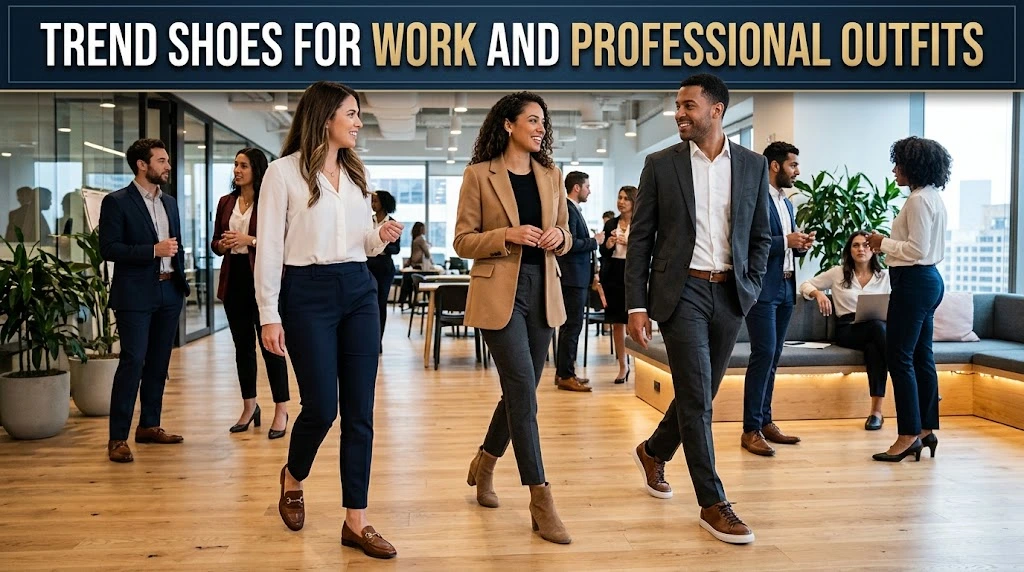
Work shoes need to do two jobs. They should look appropriate while remaining comfortable enough for a full day.
Loafers are one of the easiest choices because they provide a polished appearance without the discomfort that some high heels can cause.
Sleek ankle boots work well with trousers and dresses during cooler months. For a traditional office, choose a clean design without excessive decoration.
Low heels can also provide a dressier appearance while remaining easier to walk in than very high heels.
If your workplace has a relaxed dress code, clean sneakers may work with tailored trousers, a blazer, and a simple top. However, workplace expectations vary, so always consider the culture of your office.
For professional footwear, avoid choosing trends that look difficult to maintain. Shoes covered in delicate materials or excessive decoration may not be practical for daily commuting.
Keep a simple pair of polished shoes available for important meetings, interviews, presentations, or formal events.
Trend shoes for parties and special occasions
Special occasions give you more freedom to experiment with footwear.
Statement heels can become the focal point of a simple outfit. If your dress is understated, you can introduce metallic details, interesting textures, sculptural heels, or a strong color through your shoes.
If the outfit itself is dramatic, choose footwear that supports rather than competes with it.
For weddings and long events, comfort becomes especially important. A beautiful shoe is not helpful if you cannot walk, dance, or stand comfortably.
Consider a lower heel, block heel, elegant flat, or dressy sandal when you know you will be on your feet for hours.
A useful trick is to think about the entire event rather than only the first hour. You may look perfect when you arrive, but weddings, parties, and celebrations can last much longer than expected.
Also check the venue. Thin heels are not always practical on grass, gravel, cobblestones, or uneven outdoor surfaces.
Comfortable trend shoes worth investing in
Comfort is not the enemy of fashion. In fact, some of the smartest footwear trends focus on making shoes easier to wear.
Look for shoes with enough room for your toes to spread naturally. Your heel should feel secure without excessive pressure, and the shoe should not force your foot into an uncomfortable position.
Cushioning can help, but more cushioning does not automatically mean a better shoe. The shoe should also provide appropriate stability and fit your foot shape.
When trying shoes on, walk around rather than standing still. Pay attention to pressure points around the toes, heel, and sides of your foot.
It is also smart to try footwear at the end of the day. Feet can swell slightly after hours of normal activity, so a shoe that feels perfect in the morning may feel tighter later.
Do not assume that every shoe needs a long breaking-in period. Some materials soften with wear, but serious rubbing, pinching, or pain is a sign that the shoe may not fit properly.
A fashionable shoe that you can comfortably wear for several hours will usually deliver more value than a beautiful pair you avoid wearing.
How to shop for trend shoes without wasting money
Fashion trends can create a strong urge to buy quickly. That is exactly when it helps to slow down.
Before purchasing, check your wardrobe first. You may already own clothing that works with the trend.
Next, decide whether you want a trend-focused purchase or a long-term wardrobe staple. Those are different shopping decisions.
For a staple, choose neutral colors, durable materials, comfortable construction, and classic shapes.
For a trend piece, you can take more risks. A bold color, unusual shape, interesting texture, or dramatic sole may be fun when you treat the purchase as a statement rather than an everyday essential.
Also consider cost per wear.
A moderately priced pair worn twice a week for two years may provide more value than an expensive pair worn once.
Before buying, check:
- Fit and comfort
- Material quality
- Sole construction
- Return policy
- Maintenance requirements
- Existing wardrobe compatibility
- Expected frequency of wear
Avoid buying a shoe simply because it looks impressive in a photograph. Lighting, styling, and camera angles can make footwear appear very different in everyday life.
Common trend shoe mistakes to avoid
Even experienced fashion lovers can make footwear mistakes. Most happen when people focus on the trend and forget the outfit, comfort, or occasion.
Mistake one: buying a trend that does not match your wardrobe. A dramatic shoe may look great online but become difficult to style if everything you own has a completely different aesthetic.
Mistake two: ignoring proportions. Very heavy shoes can overwhelm delicate clothing, while extremely delicate footwear can disappear under oversized garments.
Mistake three: choosing fashion over fit. A shoe should never cause significant pain simply because it is fashionable.
Mistake four: wearing too many statement pieces. If your shoes are bold, you often do not need an equally bold bag, jacket, jewelry, and print.
Mistake five: forgetting maintenance. White sneakers, suede boots, and delicate flats need different care. A little maintenance can dramatically extend their useful life.
Mistake six: wearing the wrong shoe for the setting. A beach sandal, running sneaker, office loafer, and evening heel each have their place.
Good styling is partly about knowing when not to wear something.
How to build a versatile shoe wardrobe
You do not need a huge shoe collection to dress well. A thoughtfully planned wardrobe can cover most everyday situations.
Start with one dependable everyday sneaker. Choose a style that works with your most frequently worn casual clothing.
Then add a polished flat or loafer for outfits that need a smarter finish.
An ankle boot is useful for cooler weather, while a sandal can handle warm seasons.
Finally, add one dressier option for occasions such as dinners, celebrations, weddings, or parties.
A practical collection might look like this:
- Everyday sneaker: casual outfits and travel
- Loafer or flat: office and smart-casual looks
- Ankle boot: cooler weather
- Sandal: warm-weather outfits
- Dress shoe: special occasions
- Statement pair: personality and trend-focused styling
You can adjust this list according to your lifestyle.
Someone who rarely attends formal events may not need multiple heels. Someone who works in a formal office may need more polished footwear.
The goal is not to own every trend. It is to create a collection where each pair has a purpose.
How to make trend shoes last longer
Buying better shoes is only part of the process. Taking care of them can make a major difference.
Clean footwear according to its material. Leather, suede, canvas, synthetic materials, and mesh should not all receive the same treatment.
Let shoes dry naturally if they become wet. Avoid excessive direct heat because it can damage certain materials or cause unwanted shape changes.
Rotating your shoes also helps. Wearing the same pair every day gives the material and cushioning little time to recover from regular use.
Store shoes in a dry place away from unnecessary moisture. Keep them in a shape that helps prevent unwanted creasing where appropriate.
For frequently worn footwear, inspect the soles and heels occasionally. Early repairs can sometimes prevent more expensive damage later.
And remember that trends do not determine a shoe’s lifespan. A well-made classic can remain useful for years, while a poorly constructed trendy shoe may wear out quickly.
Final thoughts and frequently asked questions about trend shoes
The most exciting thing about footwear trends is that you do not have to follow them literally. Fashion gives you ideas; your lifestyle decides which ones deserve a place in your closet.
The best trend shoes are the ones that make your existing clothes more useful, reflect your personality, and feel good enough to wear in real life. Start with versatile styles, experiment with one or two fashion-forward choices, and always consider comfort, fit, quality, and occasion.
A great pair of shoes should not simply complete an outfit. It should make you feel more confident walking out the door.
1. What shoes are trending right now?
Popular footwear directions include retro sneakers, slim trainers, loafers, ballet flats, Mary Janes, ankle boots, tall boots, minimalist sandals, and statement footwear. The strongest choice depends on your personal style, climate, and lifestyle.
2. What are the most versatile trend shoes?
Sneakers, loafers, simple flats, ankle boots, and understated sandals are among the most versatile options. Neutral colors such as black, brown, cream, white, and tan usually provide the greatest number of outfit combinations.
3. Are chunky shoes still fashionable?
Chunky footwear can still work well, particularly when balanced with the rest of the outfit. Try substantial sneakers or loafers with wide-leg jeans, relaxed trousers, or other clothing with enough visual weight.
4. What shoes should I wear with jeans?
Straight-leg jeans work with sneakers, loafers, flats, and ankle boots. Wide-leg jeans often look better with shoes that have enough visual weight, while cropped jeans give you more freedom to showcase delicate flats or statement footwear.
5. How do I choose fashionable shoes that are comfortable?
Start with proper fit rather than appearance. Check toe room, heel security, flexibility, cushioning, and pressure points. Walk around in the shoes before buying and consider how long you normally need to wear them.
6. How many pairs of shoes should a woman own?
There is no perfect number. A practical wardrobe can often begin with an everyday sneaker, flat or loafer, ankle boot, sandal, and dressier shoe. Add additional pairs according to your work, hobbies, climate, and personal style.
7. Should I buy trendy shoes or classic shoes?
A combination is usually best. Invest more carefully in versatile classics that you expect to wear often, then use one or two trend-driven pairs to add personality and keep your wardrobe feeling fresh.