
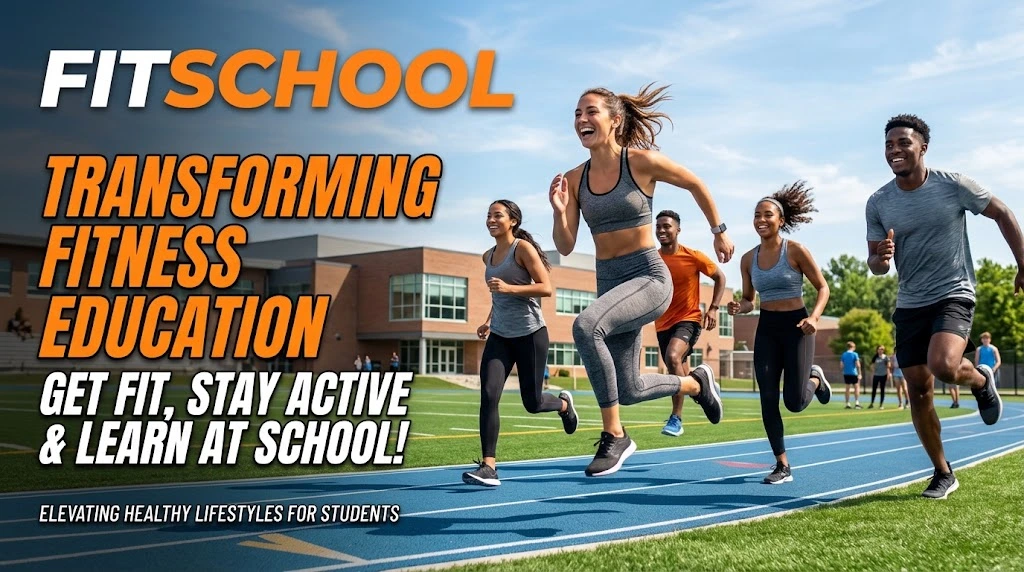
Sometimes the simplest idea can make the biggest difference in a school day. A few minutes of movement can wake up a tired classroom, help children refocus, and turn an ordinary lesson into something much more engaging. That is the basic idea behind FitSchool: making physical activity easier to bring into everyday education.
FitSchool is not simply about asking children to exercise more. The program combines short activity sessions with teacher support and educational resources. The Polish FitSchool platform describes itself as a physical-education innovation designed for early-years teachers, preschool educators, classroom teachers, and PE teachers. It uses guided training videos that children can follow with a virtual trainer.
That approach matters because school life is busy. Teachers have lessons to deliver, children have different energy levels, and there is not always enough time for a long sports session. Short, structured activities can provide a practical middle ground.
In this guide, we will look at what FitSchool means, how the program works, who can use it, what children can gain from it, and how teachers can make the most of movement-based learning.
What Is FitSchool?
FitSchool is an educational program that encourages children to become more physically active during the school day. The platform provides guided activities, teacher resources, training materials, and other educational content.
The official Polish FitSchool website says the program is intended for primary schools, preschools, and other educational settings. It supports teachers in making physical education more attractive while also introducing short periods of physical activity between lessons.
One useful feature is the range of workout lengths. The platform lists 3-minute, 8-minute, and 30-minute activities, giving teachers flexibility depending on their timetable and classroom needs.
This flexibility makes the concept easier to use in real classrooms. A teacher may not have time for a full activity session, but three or eight minutes can often fit between two lessons.
How Does FitSchool Work?
The basic process is straightforward. A teacher selects an appropriate activity, starts the training video, and students follow the movements demonstrated by the virtual trainer.
The official platform explains that children can exercise by copying the movements shown on screen. Sessions can last 3, 8, or 30 minutes, depending on the activity selected.
This structure removes some of the pressure from teachers. Instead of creating a complete workout from scratch, the teacher can use prepared material and focus on organizing the classroom.
A simple classroom routine might look like this:
- Finish a lesson.
- Move desks or create a safe open area.
- Choose a short activity.
- Check that students have enough space.
- Start the video.
- Let children follow the movements.
- Allow a short cool-down before returning to academic work.
The goal is not to turn every classroom into a gym. The goal is to make movement a natural part of the school day.
Who Can Use FitSchool?
FitSchool is designed mainly for educators who work with children. According to the official platform, this includes preschool teachers, early-years teachers, classroom educators, and physical education teachers.
That broad audience is important because physical activity does not belong only to PE lessons. A classroom teacher may use a short movement break, while a PE teacher can use longer sessions as part of a more structured activity plan.
Preschool settings can also benefit from movement-based learning. Younger children often respond well to activities that combine movement, imitation, rhythm, and play.
Teachers should still consider the age, physical ability, classroom size, and individual needs of their students before choosing an activity.
Expert tip: Start with short sessions. It is usually easier to build a consistent movement habit with a simple activity that fits the schedule than to introduce a complicated routine that teachers struggle to repeat.
Why Is Physical Activity Important at School?
Children spend a large part of their day learning, sitting, listening, reading, writing, and working with screens or books. Regular movement provides a useful change of pace.
Physical activity can support general fitness, coordination, movement skills, and an active lifestyle. It can also make a classroom feel more energetic and engaging.
The important point is consistency. One energetic activity does not create healthy habits by itself. Repeated opportunities to move can help children see physical activity as a normal part of daily life.
FitSchool’s approach focuses on making that opportunity practical. Rather than depending entirely on a dedicated sports period, teachers can introduce shorter movement sessions throughout the school day.
This can be especially useful when a class has been working on a demanding academic task and needs a change of rhythm.
FitSchool and Classroom Movement Breaks
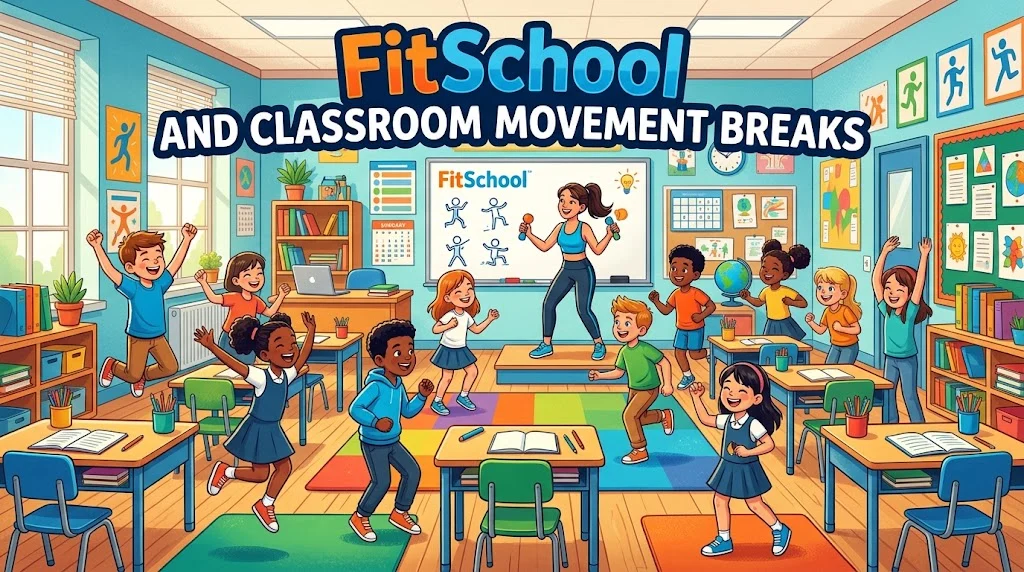
A movement break does not need to be complicated. In fact, simple activities can work better because children understand them quickly.
A short session might include marching, stretching, balance movements, simple coordination exercises, or other age-appropriate actions demonstrated by the instructor.
The biggest advantage is that a movement break has a clear beginning and end. Children know that they will move for a few minutes and then return to their normal classroom routine.
For example, imagine a class has spent forty minutes working on reading comprehension. The teacher notices that attention is dropping. Instead of continuing to push through the lesson, the teacher introduces an eight-minute activity.
Afterward, students return to their desks. The lesson can continue with a fresh rhythm.
Common mistake: Treating movement breaks as punishment or using them only when children become difficult. Movement works better when teachers present it as a normal and positive part of the school routine.
What Activities Can Students Do?
The exact activities available depend on the FitSchool content being used, but the platform centers on guided physical activity sessions that students can follow.
The official website lists different session lengths, including short 3-minute activities and longer 8- and 30-minute workouts.
For teachers, variety is useful. Children can lose interest when they repeat exactly the same routine every day.
A balanced activity plan can include different movement patterns:
- Whole-body movement
- Coordination activities
- Balance exercises
- Mobility and stretching
- Rhythm-based movement
- Simple fitness activities
- Active games
- Short classroom energizers
The best choice depends on the children and the environment.
A preschool class may enjoy playful imitation, while older primary students may respond better to challenges, rhythm, or fitness-based activities.
The teacher’s job is not to make every activity perfect. It is to create a safe environment where children feel comfortable moving.
FitSchool for Teachers
Good movement programs depend heavily on teachers. Even the best activity becomes difficult if educators do not have practical tools or confidence.
FitSchool addresses this by providing training and educational resources alongside the activity content. The platform describes its training as a way to support teachers in becoming promoters of children’s health and physical activity.
The platform also offers educational materials connected with nutrition and teaching methods.
This broader approach is valuable because children’s health is not only about exercise.
Teachers can reinforce simple ideas such as:
- Why movement matters
- Why rest matters
- Why balanced eating matters
- Why children should develop healthy routines
- Why physical activity can be enjoyable rather than a chore
Expert tip: Do not turn every activity into a lecture. Children learn better when the experience itself is enjoyable and age-appropriate.
FitSchool Training and Teacher Development
Teacher development is one of the less obvious but important parts of the program.
The FitSchool platform provides training resources intended to build teachers’ skills and knowledge. Its training section says the program aims to increase teachers’ and coaches’ competence in their role as promoters of health.
The platform also describes a certificate process. Teachers can earn a certificate after completing at least ten training sessions with students during school hours, using the available 3-, 8-, or 30-minute workouts.
This type of structure can encourage consistency.
Instead of treating physical activity as something teachers try once, a certification pathway can give educators a reason to keep using the program.
Still, the certificate should not be the main goal. The real value comes from building a classroom culture where movement becomes normal.
FitSchool and Healthy Habits
Healthy habits develop gradually. Children learn through repetition, examples, routines, and positive experiences.
That is why school-based activity can play an important role. A child who regularly experiences movement as something enjoyable may be more likely to view physical activity positively.
FitSchool also includes educational content related to conscious nutrition and student well-being. The official platform lists prepared nutrition lessons with animations, exercises, and worksheets for teachers.
This combination creates a broader idea of health education.
Instead of telling children only to “exercise more,” teachers can help them understand that health involves several connected habits.
For example, a classroom discussion might connect:
Movement → energy → concentration → rest → balanced food → overall well-being
The explanation should stay simple. Children do not need complicated nutrition terminology to understand the basic value of healthy daily choices.
FitSchool and Student Well-Being

Physical health is only one part of a child’s well-being. Children also need opportunities to manage emotions, connect with others, and feel comfortable at school.
The current FitSchool platform includes psychological education materials and exercises designed to support emotional awareness and student well-being.
This is a useful expansion of the program because physical activity and emotional well-being can sit naturally within the same school routine.
Teachers can use movement as a transition between activities rather than as an isolated event.
For instance, after a demanding classroom discussion, a short activity can create a natural reset. After movement, the teacher can calmly transition back to reading, writing, mathematics, or another subject.
The key is balance. Physical activity should support the learning environment rather than make the classroom feel constantly overstimulated.
How to Introduce FitSchool in a Classroom
Starting does not have to be difficult.
A teacher can begin with one short session rather than immediately changing the entire timetable.
A practical approach looks like this:
- Choose a consistent time. A regular routine makes movement easier to remember.
- Start with a short activity. Three or eight minutes may be enough at first.
- Prepare the space. Move unnecessary objects and make sure students have room.
- Explain the rules. Children should know how to move safely.
- Follow the guided activity. Let students focus on the movements rather than worrying about perfection.
- Finish calmly. Give children a moment to settle before starting academic work again.
After a week or two, the teacher can decide whether longer sessions would work better.
The goal is consistency before complexity.
Safety Tips for FitSchool Activities
Safety should always come first when children exercise.
Before beginning, teachers should check the room for obstacles, slippery surfaces, sharp corners, loose objects, and other hazards.
Children should also have enough personal space to move without hitting classmates.
Teachers should consider individual differences as well. Children do not all have the same fitness level, coordination, confidence, or physical ability.
A useful safety checklist includes:
- Clear the activity area.
- Check the floor.
- Remove unnecessary obstacles.
- Use age-appropriate movements.
- Explain how students should stop.
- Encourage children to work within their abilities.
- Avoid forcing a child to perform a movement that causes discomfort.
- Follow appropriate school safety procedures.
A teacher should never treat pain as something children simply need to “push through.”
Important: A digital exercise program cannot replace professional medical advice or individualized care when a child has a medical condition, injury, or specific physical limitation.
Common FitSchool Mistakes to Avoid
Even a well-designed program can become less effective if teachers use it poorly.
One common mistake is making every session too long. A movement break loses its purpose if it regularly creates timetable problems.
Another mistake is choosing activities without considering the classroom space. A movement that works beautifully in a gym may not be suitable between rows of desks.
Teachers can also make the mistake of focusing too much on performance.
Children do not need to compete during every activity. For many students, especially beginners, confidence matters more than perfect technique.
Other mistakes include:
- Using the same activity too frequently
- Ignoring students who need modifications
- Skipping safety checks
- Turning movement into a punishment
- Expecting every child to perform identically
- Making the activity feel like another stressful assignment
- Forgetting to allow students time to settle afterward
The strongest classroom routines feel structured but enjoyable.
FitSchool vs Traditional Physical Education
FitSchool should not be viewed as a replacement for every form of physical education.
Traditional PE can provide valuable opportunities for structured sports, skill development, games, teamwork, and longer periods of physical activity.
A short classroom workout serves a different purpose.
Think of it as an additional opportunity to move.
A child might have a PE lesson during the week and still benefit from short movement breaks during ordinary classroom lessons.
This distinction matters because schools do not need to choose between movement breaks and proper physical education. When resources and schedules allow, they can complement each other.
FitSchool’s official description positions the program as an educational innovation that supports physical education and introduces activity during the school day.
That makes it easier to understand its role: FitSchool adds movement opportunities rather than eliminating the need for broader physical education.
Is FitSchool Free?
The official FitSchool website states that the program is free.
That can make the platform particularly attractive to schools and educators that want additional activity resources without adding a major financial barrier.
However, teachers should always check the current official platform for the latest participation requirements, available resources, geographic availability, and registration information.
The program’s official site currently describes participation across numerous Polish cities and lists thousands of participating schools, teachers, and students.
Because program information can change, the official FitSchool website is the best place to confirm current access details.
What Makes FitSchool Useful for Modern Schools?
Modern classrooms face a simple challenge: children need opportunities to learn, but they also need opportunities to move.
FitSchool responds to that challenge with short, guided activity sessions that can fit into ordinary school routines.
Its wider collection of teacher training, nutrition education, psychological education, and physical activity resources also makes the concept broader than a basic workout video.
The strongest feature is probably its practicality.
Teachers do not always need another complicated system. They need resources that work within the reality of a school day.
A three-minute activity can be useful precisely because it is short.
An eight-minute activity can provide a stronger reset.
A 30-minute session can support a more substantial activity period.
That flexibility allows educators to choose based on the moment rather than forcing every classroom into one rigid routine.
Conclusion: Why FitSchool Deserves a Place in the School Day
FitSchool offers a practical way to bring more movement into children’s everyday education. Its guided activities, teacher resources, training materials, and broader health education content make it more than a simple exercise video library.
The biggest lesson is simple: movement does not always need a large block of time.
Sometimes three focused minutes are enough to change the energy in a classroom. Sometimes an eight-minute activity gives students the reset they need. And when the schedule allows, a longer session can provide a deeper opportunity for physical activity.
The best results come when teachers use the program consistently, safely, and with an understanding of their students’ individual needs.
FitSchool works best when movement feels natural rather than forced. When children begin to see activity as a normal, enjoyable part of school, the habit can become much more meaningful than any single workout.
FAQs About FitSchool
1. What is FitSchool?
FitSchool is an educational program that supports physical activity and health education in schools and preschools. It provides guided exercise sessions, teacher training, and educational resources.
2. How long are FitSchool workouts?
The official platform lists activities lasting 3, 8, and 30 minutes, allowing teachers to choose a session that suits their timetable.
3. Who can use FitSchool?
The program is designed for educators including preschool teachers, early-years teachers, classroom teachers, and PE teachers.
4. Is FitSchool suitable for young children?
Yes. FitSchool is used in preschools and primary-school settings, with activities designed to introduce children to movement in an engaging way. Teachers should still choose activities according to age, ability, space, and safety requirements.
5. Is FitSchool free?
The official FitSchool website states that the program is free. Teachers should check the official platform for current participation and access information.
6. Does FitSchool replace PE classes?
No. It is better understood as a way to add physical activity to the school day. Traditional PE can continue to provide structured sports, physical skills, games, and longer activity sessions.
7. Can teachers receive FitSchool training or certification?
Yes. FitSchool provides teacher training, and its training information describes a certificate pathway based on completing at least ten qualifying sessions with students.