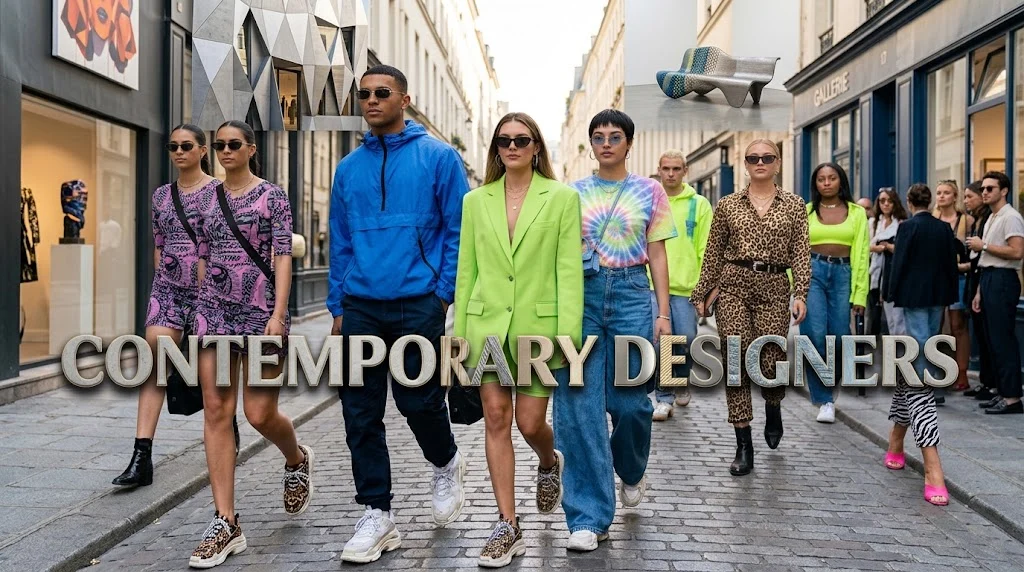
Fashion can change in a matter of weeks, but great design usually lasts much longer. A beautifully cut jacket, an unusual dress, or a perfectly balanced pair of trousers can stay in your wardrobe for years because it feels personal rather than simply trendy. That is where contemporary designers fashion becomes especially interesting.
Contemporary designers are not just copying what came before them. They take familiar ideas and give them a new point of view. A classic blazer might become softer and oversized. A simple dress might gain an unexpected cut. Traditional craftsmanship might appear alongside modern materials, sporty details, or streetwear influences.
In 2026, that creative freedom feels more important than ever. Fashion is moving toward individuality, expressive dressing, strong textures, and pieces that feel connected to real life. Current runway coverage also shows designers exploring imperfect finishes, emotional dressing, updated tailoring, bold accessories, and a mix of practicality with artistic expression.
But what exactly makes a designer contemporary? Which designers matter today? How do you recognize contemporary design, and how can you actually wear it without looking like you are trying too hard?
This guide answers those questions and shows how to bring contemporary fashion into a real wardrobe.
What Does Contemporary Designers Fashion Mean?
Contemporary designers fashion refers to clothing and accessories created by designers who work with modern ideas, current lifestyles, and evolving cultural influences. The term can describe established labels as well as newer independent designers.
The word contemporary does not simply mean “fashionable right now.” It usually suggests a design language that feels connected to the present. Designers may borrow from vintage clothing, traditional craft, sportswear, art, technology, music, or street culture, but they reinterpret those influences through a modern lens.
For example, a contemporary designer might take a traditional tailored coat and remove some of its structure. Another might combine a delicate fabric with utilitarian pockets. Someone else might use recycled materials to create a completely new silhouette.
That variety is one reason contemporary fashion is so exciting.
You will often see several qualities working together:
- Modern silhouettes
- Creative proportions
- Unexpected fabric combinations
- Strong attention to construction
- Practical details
- Cultural references
- Individual styling
- Experimental color choices
- Traditional techniques used in fresh ways
Contemporary design can therefore look minimal, romantic, sporty, dramatic, artistic, or even deliberately imperfect.
The important point is that the designer has a clear point of view.
How Contemporary Fashion Differs From Traditional Fashion
Traditional fashion often relies on established formulas. That does not make it boring. In fact, many classic garments remain popular because their shapes have already proven useful and flattering.
Contemporary fashion usually starts with those familiar ideas and asks a different question: What could this become today?
Take a white shirt as an example. A traditional version might have a neat collar, straight hem, and classic button placement. A contemporary designer could make the shirt dramatically oversized, curve the hem, move the buttons, add unusual sleeves, or combine crisp cotton with another fabric.
The basic idea remains recognizable, but the attitude changes.
Another difference involves styling. Contemporary designers often think beyond individual garments. They create complete visual ideas involving layering, proportion, accessories, footwear, and even the way clothes move.
This is why a simple contemporary outfit can sometimes look more interesting than an outfit covered in obvious trends.
There is also a growing interest in personal expression. Current fashion coverage repeatedly points toward individuality rather than one universal aesthetic. Designers and buyers are embracing personality-driven pieces, expressive colors, statement accessories, and combinations that allow people to make clothes their own.
What Makes a Designer Contemporary?
There is no single checklist that every contemporary designer must follow. Still, several qualities appear again and again.
1. A distinctive design voice
The best designers develop recognizable ideas. You might identify their work through shape, construction, fabric, color, or styling before seeing the label.
2. Modern relevance
Contemporary designers respond to how people live now. That can mean designing clothes that work between the office and dinner, combining formal and casual pieces, or creating gender-inclusive garments.
3. Experimentation
Experimentation does not always mean dramatic runway clothing. Sometimes it is as simple as changing the proportion of a sleeve or using an unexpected fabric.
4. Strong construction
Good contemporary fashion should not depend entirely on appearance. Cut, fit, seams, finishing, and fabric quality matter.
5. Cultural awareness
Many contemporary designers explore identity, heritage, community, and place. South Asian designers, for example, are increasingly presenting traditional craft and cultural references through more pared-back and globally relevant design languages.
6. A connection between creativity and wearability
This balance matters. The strongest contemporary clothing often gives you something visually interesting while remaining practical enough to wear.
Stylist tip: When evaluating a designer, do not ask only, “Is this trendy?” Ask, “Does this designer have a clear idea?”
That question will help you separate genuine design from temporary hype.
Best Contemporary Fashion Designers to Know
Contemporary fashion includes hundreds of designers around the world, so there is no single definitive list. The most useful approach is to understand different design personalities.
Established names such as Miuccia Prada, Dries Van Noten, Jonathan Anderson, Simone Rocha, Rei Kawakubo, Rick Owens, Thom Browne, and Sarah Burton have helped shape modern fashion through distinctive approaches to proportion, tailoring, texture, craft, or conceptual design.
At the same time, emerging designers are becoming increasingly important. Vogue’s 2026 global emerging-designer coverage highlights talents such as 01 Woomin, Misci, and Anthony Calydon, showing how contemporary design is developing across different regions rather than coming from only the traditional fashion capitals.
The 2026 CFDA/Vogue Fashion Fund also highlights a new generation of American talent, including Aisling Camps, Amir Taghi, Terrence Zhou of Bad Binch TONGTONG, Emily Dawn Long, Jamie Haller, Juju Vera, Zane Li of Lii, George Inaki of Milamore, Claire Sullivan, and Zoe Gustavia Anna Whalen.
These designers demonstrate an important point: contemporary fashion is not one aesthetic.
Some designers focus on tailoring. Others work with jewelry, knitwear, sculpture, sustainability, craftsmanship, or experimental silhouettes.
When exploring contemporary designers, look for the ones whose design philosophy genuinely interests you.
Contemporary Designer Clothing Trends in 2026
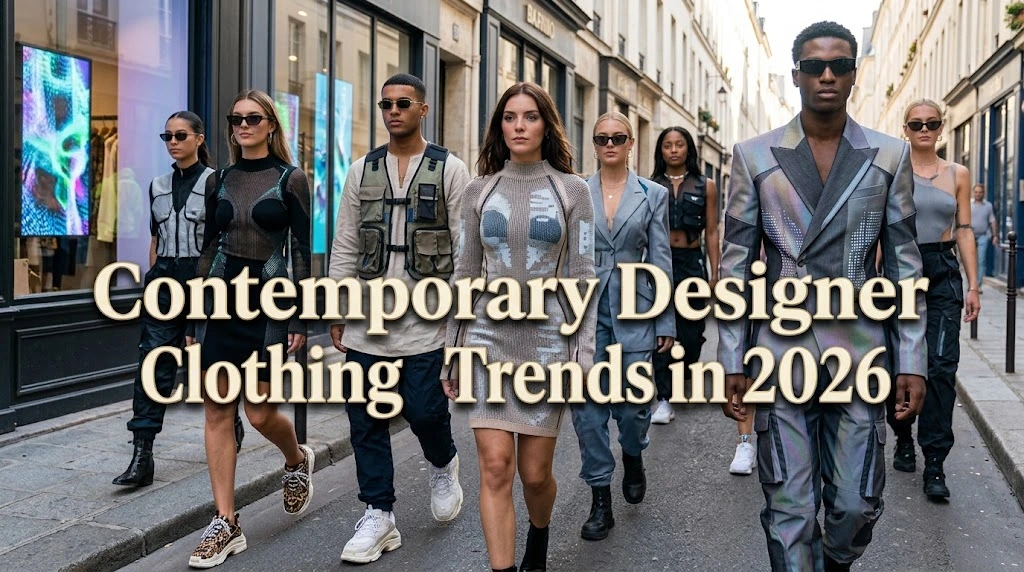
The contemporary fashion landscape in 2026 is especially broad. Instead of one dominant look, several directions are developing at the same time.
One major theme is individuality. Buyers and designers are responding to clothing with personality, texture, and emotional appeal rather than relying exclusively on quiet minimalism. Current fall 2026 coverage points to expressive accessories, bold color, textured outerwear, statement pieces, and personality-driven styling.
Tailoring also remains important, but designers continue to relax and reshape it. Oversized jackets, unusual trousers, softer shoulders, and unexpected layering can make classic tailoring feel much more current.
Texture is another major tool. Velvet, embroidery, suede, lace, leather, textured knits, and embellished surfaces can give even a simple silhouette more depth.
Spring and summer 2026 collections also showed designers mixing sporty influences, utility dressing, lace, bohemian elements, color blocking, and scarf details.
For everyday dressing, that means you do not need to buy an entire designer wardrobe. You can simply borrow one current idea.
Try:
- A sculptural jacket with straight jeans
- A lace-trimmed top under a relaxed blazer
- A statement belt over a simple dress
- Wide trousers with a fitted knit
- Sporty shoes with tailored clothing
- A textured coat over minimalist basics
The goal is controlled contrast.
Contemporary Designers and Sustainable Fashion
Sustainability has become an important part of the contemporary design conversation, although not every designer approaches it in the same way.
Some designers work with recycled or deadstock materials. Others focus on local production, long-lasting garments, responsible sourcing, repair, or smaller production quantities.
The most useful way to think about sustainable designer fashion is not simply “Is this labeled sustainable?”
Instead, ask several practical questions:
- What is the garment made from?
- How well is it constructed?
- Will I wear it repeatedly?
- Can I repair it?
- Does the design have lasting appeal?
- Is the production story transparent?
- Does the brand explain where and how the item was made?
Longevity matters because a beautifully made garment that stays in your wardrobe for ten years can be more valuable than a poorly made item you replace after one season.
Current fashion conversations also show designers moving toward more human, tactile, and imperfect approaches. Vogue’s fall 2026 designer coverage notes a desire among designers to reconnect with reality and handmade craft, while recent reporting has examined the rise of deliberately imperfect and distressed luxury fashion.
Expert tip: Do not confuse a high price with sustainability. Look at the garment, materials, construction, and expected lifespan.
How to Choose Contemporary Designer Clothes
Buying designer clothing can feel intimidating, especially if you are new to the category. The easiest way to avoid expensive mistakes is to start with your lifestyle rather than the runway.
Think about what you actually wear during an average week.
If you work in an office, a beautifully cut blazer may give you more value than a dramatic runway dress. If you travel frequently, a high-quality knit or versatile coat might make more sense.
Start by identifying three categories:
Think trousers, shirts, knitwear, denim, coats, or simple dresses.
These might include sculptural bags, unusual jackets, artistic jewelry, or distinctive shoes.
These are garments reserved for weddings, dinners, events, or special evenings.
This approach creates a wardrobe that feels personal instead of random.
Before purchasing, also check the fit carefully. Contemporary designers often play with proportions, so a garment may look intentionally oversized rather than simply too large.
Try sitting, walking, raising your arms, and turning around in the garment.
A good designer piece should still make sense when you move.
How to Style Contemporary Designer Fashion
The easiest styling mistake is wearing too many statement pieces at once.
Imagine an outfit with an oversized sculptural blazer, dramatic trousers, large earrings, embellished shoes, and a huge bag. Each piece may look beautiful individually, but together they can compete.
Instead, create a visual hierarchy.
Choose one main statement and let the other pieces support it.
For example:
Modern office style Wear a relaxed blazer with a simple T-shirt, straight trousers, loafers, and one strong bag.
Pair an unusual knit with relaxed denim and clean sneakers.
Choose a sculptural dress and keep the shoes and jewelry relatively simple.
Mix a tailored jacket with a graphic top, wide-leg trousers, and an interesting accessory.
Look 5: Minimal luxury Wear excellent trousers, a soft knit, simple leather shoes, and one distinctive piece of jewelry.
The secret is not having more designer items. It is knowing how to balance them.
Contemporary Designer Fashion for Women
Women’s contemporary fashion has become increasingly flexible. Designers are moving between traditionally feminine, masculine, sporty, romantic, and utilitarian ideas without treating those categories as strict rules.
A structured blazer can work with a flowing skirt. A romantic blouse can work with cargo trousers. A delicate dress can look modern with flat shoes and a practical coat.
This mixing creates a wardrobe that feels current without becoming disposable.
For women who prefer classic dressing, start with updated versions of familiar pieces:
- A longer or more relaxed blazer
- Wide-leg tailored trousers
- A modern midi or maxi skirt
- A sculptural handbag
- A softly structured coat
- A refined knit
- An interesting pair of flats or boots
If you prefer a more experimental style, play with proportion. Pair something oversized with something fitted. Combine a polished piece with a casual one. Mix matte fabrics with shine.
The trick is to keep at least one element familiar.
That familiar piece gives the outfit a visual anchor.
Contemporary Designer Fashion for Men
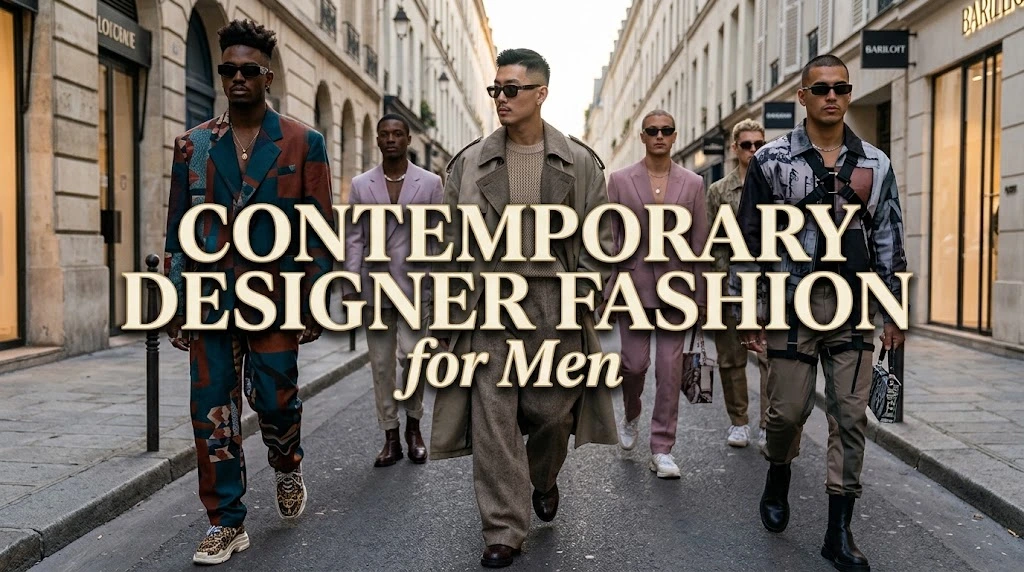
Contemporary menswear has moved far beyond the idea that a man needs a rigid suit to look polished.
Modern designers are playing with oversized tailoring, relaxed trousers, technical fabrics, knitwear, workwear, sportswear, and softer silhouettes.
One of the strongest approaches is to combine traditional menswear with relaxed pieces.
For example, try:
- A tailored jacket with loose denim
- Pleated trousers with a simple T-shirt
- A knit polo with wide-leg trousers
- A workwear jacket with refined leather shoes
- A relaxed suit with minimalist sneakers
- A long coat over casual separates
Fit matters enormously.
A contemporary silhouette may look intentionally loose, but it should still have structure. If every piece is oversized, the outfit can lose shape.
A useful rule is volume plus control.
If the trousers are very wide, choose a cleaner top. If the jacket is oversized, consider a more streamlined bottom.
Contemporary Fashion Designers vs Luxury Fashion Brands
People often use “designer,” “luxury,” and “contemporary” as if they mean the same thing. They do not.
Designer fashion generally refers to clothing created under a designer’s creative direction. The term can cover a wide range of price points and business models.
Luxury fashion usually emphasizes premium materials, craftsmanship, exclusivity, heritage, service, and brand positioning. Price often plays a significant role, but luxury is about more than price.
Contemporary fashion focuses more on current design ideas and modern relevance. A contemporary designer can operate within luxury, but the terms are not interchangeable.
This distinction matters when shopping.
A small independent designer may create an extraordinary contemporary garment without having the global recognition of a major luxury house.
In fact, emerging designers often provide some of the most interesting ideas because they have fewer expectations to satisfy.
The 2026 fashion landscape demonstrates this clearly. Major fashion institutions continue to support emerging designers through programs such as the CFDA/Vogue Fashion Fund, while international fashion coverage increasingly gives space to designers outside the traditional luxury system.
How to Spot Quality in Contemporary Designer Clothing
A designer label does not automatically guarantee excellent construction. Learning to inspect clothing will make you a smarter shopper.
Start with the fabric.
Good fabric should suit the garment’s purpose. A summer shirt needs breathability and movement. A winter coat needs warmth and structure. A flowing dress should drape rather than fight against the body.
Next, examine the seams.
Look for:
- Even stitching
- Clean finishing
- Secure buttons
- Smooth zippers
- Consistent lining
- Proper pattern matching
- Strong hems
- Comfortable movement
Then check the fit.
Stand naturally rather than posing in front of the mirror. Sit down. Walk. Raise your arms. See whether the garment still feels comfortable.
Also examine the details.
Sometimes the most valuable part of contemporary design is hidden. A clever closure, unusual internal construction, thoughtful pocket placement, or carefully shaped seam can make a garment special without being immediately obvious.
Common mistake: Buying something simply because the runway version looked incredible.
Runway styling is designed to create an image. Your wardrobe needs to create an outfit.
Those are not always the same thing.
Where to Discover Emerging Contemporary Designers
If you want to go beyond familiar luxury names, look toward fashion weeks, independent boutiques, design competitions, concept stores, and respected fashion publications.
Vogue’s emerging-designer coverage is particularly useful because it highlights designers from different regions and creative backgrounds.
The CFDA/Vogue Fashion Fund is another valuable source for discovering American talent. Its program has supported hundreds of designers and has helped develop names that later became important parts of the fashion landscape.
You can also discover designers by following a specific design category.
If you love:
- Tailoring: explore designers known for sharp or unconventional suiting.
- Knitwear: look for labels experimenting with texture and construction.
- Romantic fashion: explore designers working with lace, draping, and soft fabrics.
- Streetwear: search for independent labels combining utility and culture.
- Craft: look for designers working closely with artisans.
- Jewelry: explore contemporary designers who treat jewelry as sculpture.
This approach is better than simply searching for “the best designer.”
The best designer is the one whose work fits your taste, lifestyle, and values.
Common Mistakes When Buying Contemporary Designer Fashion
Contemporary fashion encourages experimentation, but experimentation becomes expensive when you do not know what you are buying.
Mistake 1: Chasing every runway trend
Not every runway idea belongs in your wardrobe.
Choose trends that work with clothes you already own.
Mistake 2: Ignoring fit
An unusual silhouette still needs intentional proportions.
If you cannot tell whether a garment is designed to be oversized or simply too large, compare it with the designer’s official styling and measurements.
Mistake 3: Buying only for the label
The logo should not be the reason you love a piece.
Ask yourself whether you would still want the garment without the brand name.
Mistake 4: Over-styling
Contemporary clothes often need space to breathe.
One strong piece can have more impact than five competing statement items.
Mistake 5: Forgetting cost per wear
A $1,000 jacket that you wear 100 times may provide more value than a $300 dress you wear twice.
Price alone cannot tell you whether something is worth buying.
Mistake 6: Treating care instructions as optional
Fine fabrics and unusual construction often require special care. Read the label before purchasing.
Mistake 7: Buying a fantasy lifestyle
This is one of the easiest mistakes to make.
You may imagine yourself wearing a dramatic designer coat every weekend, but if your real life involves warm weather, public transport, casual workplaces, or frequent travel, the coat may spend most of its life in your closet.
Buy for the life you actually live.
How Contemporary Designers Are Shaping the Future of Fashion
The future of fashion will probably not belong to one single aesthetic. Instead, contemporary designers are helping create a fashion culture where many styles can exist at once.
Technology will continue to influence design, but craftsmanship and human creativity remain central. Sustainability will continue to affect materials and production decisions. Cultural exchange will bring more regional perspectives into global fashion.
There is also a growing appetite for individuality.
Current 2026 reporting shows designers and fashion buyers responding to texture, expressive color, nostalgia, dramatic accessories, updated classics, and clothing with a stronger emotional character.
South Asian fashion provides another useful example. Designers are increasingly combining traditional craft knowledge with more modern, pared-back silhouettes, showing that heritage does not have to look old-fashioned.
This shift matters because fashion becomes more interesting when designers do not feel forced to choose between tradition and innovation.
The future may belong to designers who can connect both.
For shoppers, that means more choice.
You can wear something minimal or dramatic. Handmade or technical. Vintage-inspired or futuristic. Masculine or feminine. Local or global.
Contemporary fashion gives you permission to combine those ideas.
Conclusion and 7 FAQs About Contemporary Designers Fashion
Contemporary designers fashion is ultimately about seeing familiar clothing differently.
The most exciting designers are not necessarily the ones creating the loudest pieces. They are the ones with a clear perspective. They understand proportion, material, construction, culture, and the way people actually live.
For shoppers, the best approach is simple: start with your lifestyle, learn to recognize quality, choose designers whose ideas genuinely interest you, and avoid buying something simply because everyone is talking about it.
You do not need a wardrobe filled with designer labels to dress like someone who understands fashion. One beautifully designed jacket, an unusual pair of trousers, a distinctive bag, or a carefully made knit can completely change the way your existing clothes look.
And that is the real strength of contemporary design.
It gives old ideas a new life while leaving enough room for you to make them your own.
1. What is contemporary designers fashion?
Contemporary designers fashion refers to modern clothing and accessories created with current design ideas, updated silhouettes, innovative materials, cultural influences, and individual creative perspectives. It can include both established designers and emerging independent labels.
2. What is the difference between contemporary and luxury fashion?
Luxury fashion usually emphasizes exclusivity, premium materials, craftsmanship, heritage, and brand positioning. Contemporary fashion focuses more strongly on modern design ideas and current cultural relevance. A brand can be both contemporary and luxury, but the terms do not mean exactly the same thing.
3. Who are some contemporary fashion designers to know?
The contemporary fashion landscape includes established designers such as Miuccia Prada, Dries Van Noten, Rick Owens, Thom Browne, Simone Rocha, and Jonathan Anderson, along with many emerging designers. Current 2026 programs and fashion coverage also highlight newer names such as Aisling Camps, Zane Li, Emily Dawn Long, Terrence Zhou, and Zoe Gustavia Anna Whalen.
4. Is contemporary designer clothing worth the money?
It can be, particularly when the garment offers excellent construction, versatile styling, strong materials, and long-term wear. Instead of judging value by the label, consider cost per wear, quality, fit, and how often the item will realistically enter your wardrobe rotation.
5. How can I wear contemporary fashion without looking overdressed?
Start with one statement piece. Pair an unusual jacket with simple trousers, or wear a distinctive skirt with a basic knit. Keeping the rest of the outfit relatively clean allows the contemporary piece to stand out naturally.
6. Is contemporary fashion sustainable?
Not automatically. Some contemporary designers focus on responsible materials, craftsmanship, local production, repair, or longer-lasting garments, while others may not. Check the brand’s materials, production information, durability, and transparency rather than assuming that “designer” means sustainable.
7. How do I find emerging contemporary designers?
Follow major fashion weeks, independent boutiques, respected fashion publications, designer competitions, and organizations that support new talent. The CFDA/Vogue Fashion Fund and Vogue’s global emerging-designer coverage are useful starting points for discovering new names.